Divinity and State
0
0
As an Amazon Associate and affiliate partner, Menrva Books earns from qualifying purchases. Learn more
Author Description
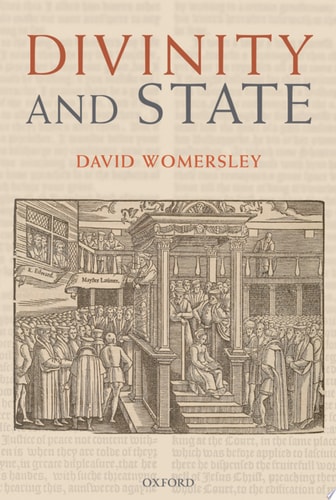
In 1589 the Privy Council encouraged the Archbishop of Canterbury to take steps to control the theatres, which had offended authority by putting on plays which addressed 'certen matters of Divinytie and of State unfitt to be suffred'.How had questions of divinity and state become entangled? The Reformation had invested the English Crown with supremacy over the Church, and religious belief had thus been transformed into a political statement. In the plentiful chronicle literature of the sixteenth-century, questions of monarchical legitimacy and religious orthodoxy became intertwined as a consequence of that demand for a usable national past created by the high political developments of the 1530s.Divinity and State explores the consequences of these events in the English historiography and historical drama of the sixteenth century. It is divided into four parts. In the first, the impact of reformed religion on narratives of the national past is measured and described. Part II examines how the entanglement of the national past and reformed religion was reflected in historical drama from Bale to the early years of James I, and focuses on two paradigmatic characters: the sanctified monarch and the martyred subject. Part III considers Shakespeare's history plays in the light of the preceding discussion, and finds that Shakespeare's career as a historical dramatist shows him eventually re-shaping the history play with great audacity. Part IV corroborates this reading of Shakespeare's later history plays by reference to the dramatic ripostes they provoked.
Menrva's Summary
THE THESIS
This work investigates how the English Reformation fundamentally entangled religious belief with political legitimacy, creating a new, volatile framework for sixteenth-century historiography and drama. David Womersley examines the shift in national identity following the Crown's assumption of supremacy over the Church in the 1530s. By analyzing chronicle literature and historical plays, the author demonstrates how the demand for a usable national past forced writers to reconcile monarchical authority with religious orthodoxy. The text argues that this tension became a defining feature of the era's intellectual and creative output.
THE SCOPE MAP
What You Will Find
- Analysis of sixteenth-century English chronicle literature and its role in shaping national identity.
- Examination of the evolution of historical drama from John Bale through the early Jacobean period.
- Detailed study of Shakespeare's history plays and their structural innovations regarding political and religious themes.
- Investigation of the archetypes of the sanctified monarch and the martyred subject within the context of reformed religion.
THE AUTHORITY PERSPECTIVE
Scholars frequently cite this work as a rigorous examination of the intersection between early modern political theology and dramatic form. Readers often note the academic density of the prose, which provides a comprehensive framework for understanding the ideological pressures exerted on Elizabethan and Jacobean playwrights.
Page Count:
400
Publication Date:
2010-04-19
Publisher:
Oxford University Press
ISBN-10:
0199255644
ISBN-13:
9780199255641
History
Drama
Religion
Reformation
Religion and literature
Great Britain
Literary Criticism
Community Tags
Other Editions(2)
Similar Books