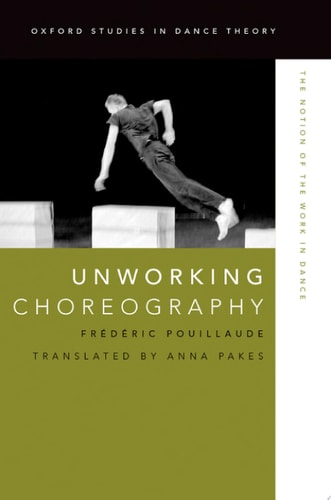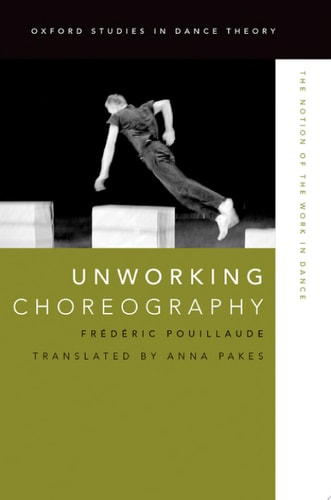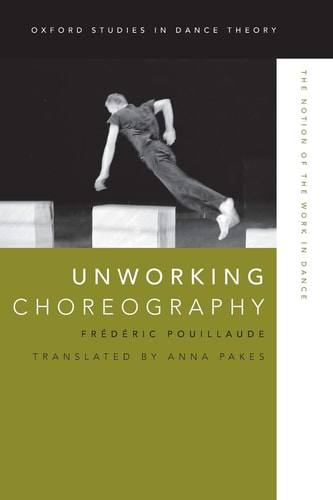
Unworking Choreography: The Notion of the Work in Dance
0
0
As an Amazon Associate and affiliate partner, Menrva Books earns from qualifying purchases. Learn more
Author Description
There is no archive or museum of human movement, no place where choreographies can be collected and conserved in pristine form. The central consequence of this is the incapacity of philosophy and aesthetics to think of dance as a positive and empirical art. In the eyes of philosophers, dance refers to a space other than art, considered both more frivolous and more fundamental than the artwork without ever quite attaining the status of a work. Unworking Choreography develops this idea and postulates an unworking as evidenced by a conspicuous absence of references to actual choreographic works within philosophical accounts of dance; the late development and partial dominance of the notion of the work in dance in contrast to other art forms such as painting, music, and theatre; the difficulties in identifying dance works given a lack of scores and an apparent resistance within the art form to the possibility of notation; and the questioning of ends of dance in contemporary practice and the relativisation of the very idea that dance artistic or choreographic processes aim at work production.
Menrva's Summary
THE THESIS
This book investigates the ontological status of dance by questioning why the medium has historically struggled to be categorized as a 'work' within aesthetic philosophy. Frédéric Pouillaude, a scholar of aesthetics and performance, utilizes a rigorous philosophical framework to examine the absence of a formal archive for human movement. He argues that the inherent ephemerality of dance creates a unique tension between the act of performance and the traditional definition of an artistic work, challenging the reader to reconsider the boundaries of choreographic production.
THE SCOPE MAP
What You Will Find
- A critical analysis of the historical exclusion of dance from traditional aesthetic categories.
- An examination of the relationship between choreographic notation and the preservation of movement.
- A comparative study of dance against other art forms such as painting, music, and theatre.
- An exploration of contemporary choreographic practices that resist the traditional 'work' paradigm.
THE AUTHORITY PERSPECTIVE
Experts in dance theory and aesthetics recognize this text as a significant contribution to the ontology of performance. Readers frequently note the academic density of the prose, which requires a strong background in continental philosophy to fully navigate.
Page Count:
376
Publication Date:
2017-04-14
Publisher:
Oxford University Press
ISBN-10:
0199314659
ISBN-13:
9780199314652
Philosophy
Theory
Aesthetics
Dance