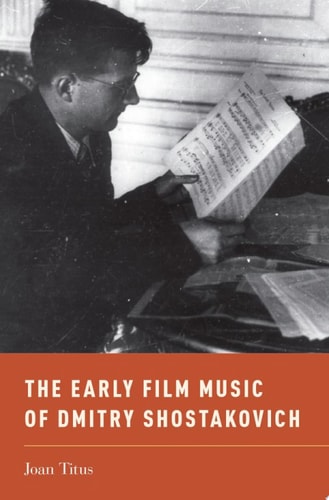
The Early Film Music of Dmitry Shostakovich
0
0
As an Amazon Associate and affiliate partner, Menrva Books earns from qualifying purchases. Learn more
Author Description
In the late 1920s, Dmitry Shostakovich emerged as one of the first Soviet film composers. With his first score for the silent film New Babylon (1928-29) and the many sound scores that followed, he was situated to observe and participate in the changing politics of the film industry and negotiate the role of the film composer. In The Early Film Music of Dmitry Shostakovich, author Joan Titus examines the relationship between musical narration, audience, filmmaker, and composer in six of Shostakovich's early film scores, from 1928 through 1936. Titus engages with the construct of Soviet intelligibility, the filmmaking and scoring processes, and the cultural politics of scoring Soviet film music, asking how listeners hear and see Shostakovich. The discussions of the scores are enriched by the composer's own writing on film music, along with archival materials and recently discovered musical manuscripts that illuminate the collaborative processes of the film teams, studios, and composer. The Early Film Music of Dmitry Shostakovich commingles film/media studies, musicology, and Russian studies, and is sure to be of interest to a wide audience including those in music studies, film/media scholars, and Slavicists.
Menrva's Summary
THE THESIS
How did Dmitry Shostakovich navigate the complex intersection of Soviet political ideology and the emerging craft of film scoring during the early years of his career? Joan Titus, a scholar specializing in Russian music and film, utilizes archival manuscripts and the composer's own writings to analyze six specific film scores produced between 1928 and 1936. By examining the collaborative dynamics between composers, filmmakers, and state studios, the author argues that Shostakovich's early work reflects a deliberate negotiation of Soviet intelligibility and cultural identity. The study provides a framework for understanding how musical narration functioned as a tool for both artistic expression and political compliance within the Soviet film industry.
THE SCOPE MAP
What You Will Find
- Analysis of six specific film scores composed by Shostakovich between 1928 and 1936.
- Examination of the collaborative processes between film teams, studios, and the composer.
- Integration of primary source materials, including recently discovered musical manuscripts and the composer's personal writings.
- A multidisciplinary methodology combining musicology, film and media studies, and Russian cultural history.
THE AUTHORITY PERSPECTIVE
Experts and scholars in the fields of musicology and Slavic studies recognize this work as a significant contribution to the understanding of early Soviet cinema and its sonic landscape. Readers frequently note the academic density of the prose, which serves as a foundational text for those researching the intersection of political history and film composition.
Page Count:
272
Publication Date:
2016-03-15
Publisher:
Oxford University Press
ISBN-10:
0199315140
ISBN-13:
9780199315147
Biography
Film Studies
Humanities
Criticism history
Russian History
Musicology
Community Tags
Other Editions(3)

Similar Books