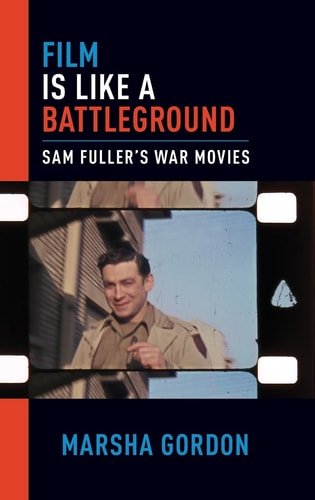
Film is Like a Battleground: Sam Fuller's War Movies
0
0
As an Amazon Associate and affiliate partner, Menrva Books earns from qualifying purchases. Learn more
Author Description
Film is Like a Battleground: Sam Fuller's War Movies is the first book to focus on the genre that best defined the American director's career: the war film. It draws on previously unexplored archival materials, such as Fuller's Federal Bureau of Investigation files and WWII-era 16mm films, to explore the director's lifelong interest in making challenging, thought-provoking, and often politically dangerous movies about war.After establishing the roots of Fuller's cinematographic schooling in the trenches during World War II, including careful consideration of his 16mm footage of a Nazi camp at the end of that war, Film is Like a Battleground explores Fuller's first forays into hot war representation in Hollywood with the pioneering Korean conflict films The Steel Helmet (1951) and Fixed Bayonets (1951). This pair of films introduced Fuller to his first run-ins with the American political machine when they triggered both FBI and Department of Defense investigations into his political sympathies and affiliations. Fuller's cold war films Pickup on South Street (1953) and, though it veers into hot war territory, Hell and High Water (1954) are Fuller's responses to the political pressures he had now personally experienced and resented. A chapter on Fuller's representation of pre-American-invasion Vietnam in China Gate (1957) alongside his unrealized Vietnam war screenplay, The Rifle (ca. late 1960s), illustrates the degree to which Fuller's representation of war and nation shifted even as he continued to probe war's impossible contradictions.Film is Like a Battleground would be incomplete without a thorough exploration of the films depicting the war Fuller personally experienced and spent a lifetime contemplating, WWII. Verboten! (1959), Merrill's Marauder's (1962), and The Big Red One (1980) demonstrate Fuller's representation of a morally justifiable war. Fuller's 1959 CBS television pilot--Dogface--offers a glimpse at one of Fuller's failed attempts to bring his WWII s
Menrva's Summary
THE THESIS
This book investigates how Sam Fuller’s personal combat experiences during World War II shaped his cinematic approach to war and his subsequent conflicts with the American political establishment. Marsha Gordon, a scholar of film history, utilizes previously unexamined archival materials—including Fuller’s FBI files and his own 16mm combat footage—to construct a framework that links the director's lived reality to his provocative filmography. She argues that Fuller’s work serves as a critical, often subversive, examination of the contradictions inherent in American military and political identity.
THE SCOPE MAP
What You Will Find
- Analysis of Fuller’s early Korean War films, specifically The Steel Helmet and Fixed Bayonets.
- Examination of Cold War-era titles such as Pickup on South Street and Hell and High Water.
- Investigation into Fuller’s unrealized projects, including the Vietnam-era screenplay The Rifle.
- Detailed study of his WWII-focused films like The Big Red One and Verboten!.
- Use of primary source documents including FBI surveillance records and personal 16mm film archives.
Scope Limits
- The text focuses primarily on war-themed works, excluding a comprehensive analysis of Fuller’s entire non-war filmography.
- The study does not provide a full biographical account of Fuller’s life outside of his professional and political interactions with the film industry.
THE AUTHORITY PERSPECTIVE
Scholars and film historians recognize this work as a significant contribution to the study of American auteur cinema and the intersection of politics and genre. Readers frequently note the meticulous use of archival evidence, which provides a rigorous academic foundation for understanding Fuller’s complex relationship with the Hollywood studio system and government oversight.
Page Count:
330
Publication Date:
2017-02-03
Publisher:
Oxford University Press
ISBN-10:
019026974X
ISBN-13:
9780190269746
Biography
Film Studies
War Films
War Cinema
American History
Director Studies
Community Tags
Other Editions(2)
Similar Books


Reader Comments
Share Your Thoughts
No comments yet. Be the first to share your thoughts!