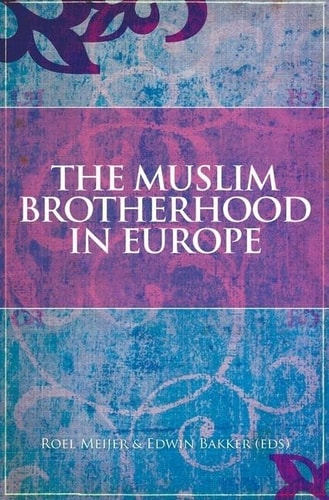
The Muslim Brotherhood in Europe
0
0
As an Amazon Associate and affiliate partner, Menrva Books earns from qualifying purchases. Learn more
Author Description
The Muslim Brotherhood in the Middle East has always attracted widely divergent attention. Scholars have regarded it both as the source of terrorism and, more recently, as the potential harbinger of democratisation. The Muslim Brotherhood in Europe has attracted far less attention, but its ambiguous reputation in the Middle East has led to widespread speculation about its character. Its critics regard the European organisations as part of a suspicious, secretive, centrally-led world-wide organisation that enhances the alienation of Muslims in Europe. Its sympathisers, on the other hand, regard the Brotherhood as a moderate movement that has been Europeanised and promotes integration.This volume brings together experts on the European Muslim Brotherhood who address some of the main issues on which the discussion has concentrated. After an introduction dealing with the debate in the European press, the first section shows that the Brotherhood consists primarily of a network of informal ties, which have developed a host of localised practices and contradictory trends. The second part deals with the Brotherhood organisations in different European countries and traces their highly specific trajectories and relations with the local non-Muslim press and authorities. The third section concentrates on the ideological developments of the movement in the Middle East and Europe.
Menrva's Summary
THE THESIS
This volume investigates the organizational structure, ideological evolution, and social impact of the Muslim Brotherhood within the European context. Editors Edwin Bakker and Roel Meijer compile research from various experts to address the tension between critics who view the movement as a secretive, alienating force and sympathizers who argue it facilitates integration. The text moves beyond speculation by examining the movement's localized practices and its specific historical trajectories across different European nations.
THE SCOPE MAP
What You Will Find
- Analysis of the informal network of ties that define the Brotherhood's European presence.
- Comparative studies of organizational development across multiple European countries.
- Examination of the ideological shifts occurring within the movement in both Middle Eastern and European contexts.
- Assessment of the relationship between Brotherhood-affiliated organizations and local non-Muslim authorities and media.
THE AUTHORITY PERSPECTIVE
Experts and scholars in the field of European political sociology identify this work as a critical resource for understanding the nuanced reality of Islamic movements in the West. Readers frequently note the academic rigor of the text, which provides a necessary, evidence-based counterpoint to the often polarized public discourse surrounding the organization.
Page Count:
224
Publication Date:
2013-01-08
Publisher:
Oxford University Press
ISBN-10:
0199327637
ISBN-13:
9780199327638
Religion
History
International relations
Europe
Muslims europe
Sociology
Community Tags
Other Editions(3)

Similar Books