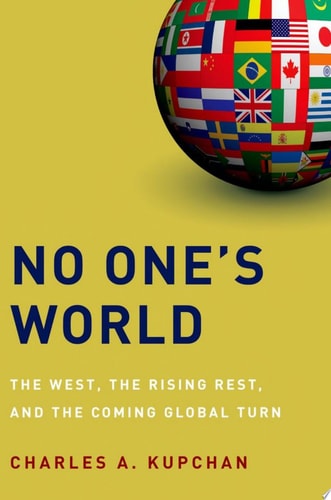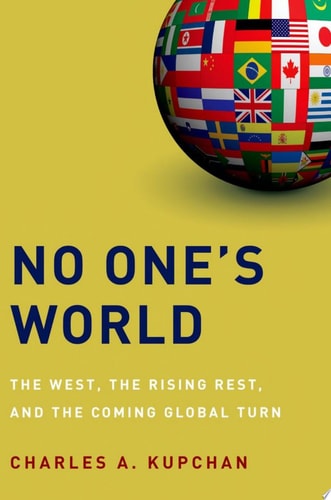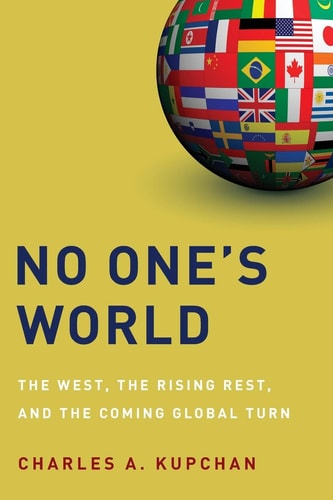
No One's World: The West, the Rising Rest, and the Coming Global Turn
0
0
As an Amazon Associate and affiliate partner, Menrva Books earns from qualifying purchases. Learn more
Author Description
The world is on the cusp of a global turn. Between 1500 and 1800, the West sprinted ahead of other centers of power in Asia and the Middle East. Europe and the United States have dominated the world since. But today the West's preeminence is slipping away as China, India, Brazil and other emerging powers rise. Although most strategists recognize that the dominance of the West is on the wane, they are confident that its founding ideas--democracy, capitalism, and secular nationalism--will continue to spread, ensuring that the Western order will outlast its primacy.In No One's World, Charles A. Kupchan boldly challenges this view, arguing that the world is headed for political and ideological diversity; emerging powers will neither defer to the West's lead nor converge toward the Western way. The ascent of the West was the product of social and economic conditions unique to Europe and the United States. As other regions now rise, they are following their own paths to modernity and embracing their own conceptions of domestic and international order.Kupchan contends that the Western order will not be displaced by a new great power or dominant political model. The twenty-first century will not belong to America, China, Asia, or anyone else. It will be no one's world. For the first time in history, an interdependent world will be without a center of gravity or global guardian.More than simply diagnosing what lies ahead, Kupchan provides a detailed strategy for striking a bargain between the West and the rising rest by fashioning a new consensus on issues of legitimacy, sovereignty, and governance. Thoughtful, provocative, sweeping in scope, this work is nothing less than a global guidebook for the 21st century.
Menrva's Summary
THE THESIS
The central question of this work is whether the decline of Western global dominance will lead to a new singular power or a fragmented, multipolar international order. Charles A. Kupchan, a senior fellow at the Council on Foreign Relations, utilizes historical analysis and geopolitical theory to argue that the world is moving toward a period of ideological and political diversity. He posits that emerging powers like China, India, and Brazil are not merely catching up to Western standards but are instead forging unique paths to modernity that reject the universal adoption of Western democracy and capitalism.
THE SCOPE MAP
What You Will Find
- Historical analysis of the rise of Western power between 1500 and 1800.
- Comparative study of modernization paths in Asia, the Middle East, and the West.
- Theoretical framework for a post-hegemonic global order lacking a central guardian.
- Strategic policy recommendations for negotiating legitimacy and governance between the West and emerging powers.
THE AUTHORITY PERSPECTIVE
Experts frequently cite this work as a significant contribution to the debate on the future of international order and the limits of Western influence. Readers often note the analytical depth of the prose, which provides a balanced, non-alarmist perspective on the shifting global balance of power.
Page Count:
272
Publication Date:
2013-09-01
Publisher:
Oxford University Press
ISBN-10:
0199325227
ISBN-13:
9780199325221
History
Developing Countries
Geopolitics
Globalization
International relations