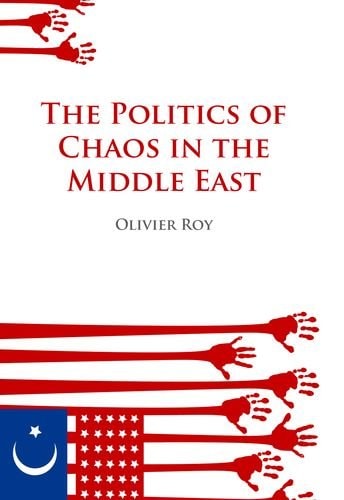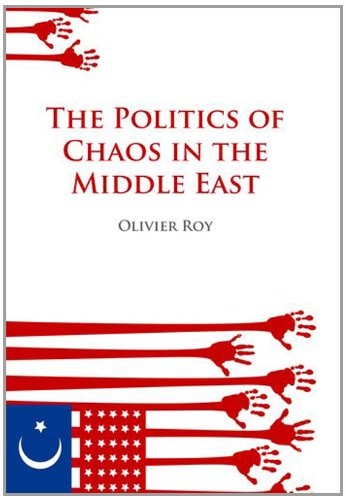
Politics of Chaos in the Middle East
0
0
As an Amazon Associate and affiliate partner, Menrva Books earns from qualifying purchases. Learn more
Author Description
Olivier Roy argues that the unintended and unforeseen consequences of the "war on terror" have artificially conflated conflicts in the Middle East such that they appear to be the expression of a widespread "Muslim anger" against the West. In this new book he seeks to restore the individual logic and dynamics of each of these conflicts, the better to understand the widespread political discontent that sustains them. Instead of two opposed sides, an "us" and a "them," he warns that the West faces an array of "reverse alliances": in Pakistan the West backs General Musharraf, whose military intelligence services support the Taliban; in Iraq the United States shores up a government that has close links to its arch-enemy, Iran; the Iraqi Kurds, allies of the Americans, give sanctuary to an adversary (the PKK) of a fellow NATO member, Turkey; while the Saudis support the Iraqi Sunnis who are fighting Coalition forces. If these issues were not enough to contend with, the Shia-Sunni divide has emerged as one of the leading strategic factors in the Middle East. But the "war on terror" is not merely the geopolitical blunder of a lunatic neo-conservative fringe in Washington; it is also deeply rooted in Western perceptions of the Middle East. Chief among these is the belief that Islam, rather than politics, is the overarching factor in all such conflicts, which in turn explains the West's support for either would be secular democrats or more or less benign dictators. Roy concludes by arguing that the West has no alternative but to engage in a dialogue with the political forces that count, namely the Islamo-nationalists of Hamas and the Muslim Brotherhood.
Menrva's Summary
THE THESIS
Olivier Roy investigates whether the Western perception of a monolithic 'Muslim anger' obscures the distinct, localized political dynamics driving conflicts across the Middle East. Drawing on his expertise as a political scientist and scholar of Islam, Roy argues that the 'war on terror' has created a series of contradictory 'reverse alliances' that undermine Western strategic goals. He posits that by framing regional instability primarily through a religious lens, Western policymakers have failed to engage with the pragmatic political actors necessary for long-term stability.
THE SCOPE MAP
What You Will Find
- Analysis of the 'reverse alliances' involving Pakistan, Iraq, Iran, and Turkey.
- Examination of the strategic impact of the Shia-Sunni divide on regional stability.
- Critique of Western foreign policy frameworks, specifically the neo-conservative approach to the Middle East.
- Evaluation of the role of Islamo-nationalist groups like Hamas and the Muslim Brotherhood in future political engagement.
THE AUTHORITY PERSPECTIVE
Experts recognize this work as a critical intervention in post-9/11 geopolitical discourse, noting its challenge to conventional Western narratives regarding Islamic political movements. Readers frequently highlight the clarity of Roy's analysis regarding the complex, often counter-intuitive nature of regional power dynamics.
Page Count:
160
Publication Date:
2008-03-22
Publisher:
Oxford University Press
ISBN-10:
0199326495
ISBN-13:
9780199326495
Politics
History
Middle East
World politics
International relations
Geopolitics
Islam