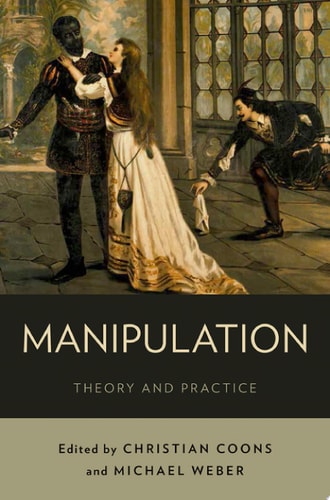
Manipulation: Theory and Practice
0
0
As an Amazon Associate and affiliate partner, Menrva Books earns from qualifying purchases. Learn more
Author Description
In all groups -- from couples to nation-states -- people influence one another. Much of this influence is benign, for example giving advice to friends or serving as role models for our children and students. Some forms of influence, however, are clearly morally suspect, such as threats of violence and blackmail. A great deal of attention has been paid to one form of morally suspect influence, namely coercion. Less attention has been paid to what might be a more pervasive form of influence: manipulation. The essays in this volume address this relative imbalance by focusing on manipulation, examining its nature, moral status, and its significance in personal and social life.They address a number of central questions: What counts as manipulation? How is it distinguished from coercion and ordinary rational persuasion? Is it always wrong, or can it sometimes be justified, and if so, when? Is manipulative influence more benign than coercion? Can one manipulate unintentionally? How does being manipulated to act bear on one's moral responsibly for so acting? Given various answers to these questions, what should we think of practices such as advertising and seduction?
Menrva's Summary
THE THESIS
This volume investigates the conceptual boundaries, moral implications, and social significance of manipulation as a distinct form of interpersonal influence. Editors Christian Coons and Michael Weber curate a collection of essays from various scholars to establish a rigorous framework for defining manipulation. By contrasting it with coercion and rational persuasion, the contributors analyze whether manipulative acts are inherently unethical or if they can be justified under specific circumstances.
THE SCOPE MAP
What You Will Find
- Philosophical definitions distinguishing manipulation from coercion and rational persuasion
- Ethical analysis regarding the moral responsibility of the manipulated agent
- Examination of manipulative practices in advertising, seduction, and political discourse
- Theoretical inquiries into the possibility of unintentional manipulation
THE AUTHORITY PERSPECTIVE
Scholars and students of ethics frequently cite this collection as a foundational text for understanding the nuances of influence in social and personal contexts. Experts note that the prose maintains a high level of academic density, making it a primary resource for those researching the intersection of moral philosophy and behavioral psychology.
Page Count:
270
Publication Date:
2014-01-01
Publisher:
Oxford University Press
ISBN-10:
0199338221
ISBN-13:
9780199338221
Philosophy
Non-Fiction
Ethics
Authority
Community Tags
Similar Books