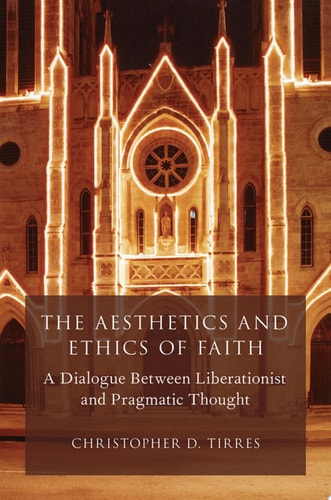
The Aesthetics and Ethics of Faith: A Dialogue Between Liberationist and Pragmatic Thought
0
0
As an Amazon Associate and affiliate partner, Menrva Books earns from qualifying purchases. Learn more
Author Description
What is the future of liberation thought in the Americas? In this groundbreaking work, Christopher D. Tirres takes up this question by looking at the methodological connections between two quintessentially American traditions: liberation theology and pragmatism. He explains how pragmatism lends philosophical clarity and depth to some of liberation theology's core ideas and assumptions. Liberation theology in turn offers pragmatism a more nuanced and sympathetic approach to religious faith, especially its social and pedagogical dimensions. Ultimately, Tirres crafts a philosophical foundation that ensures the continued relevance of liberation thought in today's world.Keeping true to the method of pragmatism, the book begins inductively with a set of actual experiences-- the Good Friday liturgies at the San Fernando Cathedral in San Antonio, Texas-- and provides a compelling description of the way these performative rituals integrate the aesthetic and ethical dimensions of faith. Subsequent chapters probe this integration deductively at three levels of theoretical analysis: experience/metaphysics, sociality, and pedagogy. As Tirres shows, the aesthetic and ethical dimensions of faith emerge in different yet related ways at all three levels. He argues that utilizing the categories of the aesthetic and ethical enables a richer understanding of the dynamic relationship between faith and politics.This book builds new bridges between a number of discourses and key figures, and will be of interest to all who are interested in the liberatory potential of engaged faith praxis, especially when it is expressed in the form of religious ritual.
Menrva's Summary
THE THESIS
This work investigates how the methodological synthesis of liberation theology and American pragmatism can provide a robust philosophical foundation for the future of liberation thought. Christopher D. Tirres, a scholar of religion, utilizes a dual approach that combines inductive observation of religious ritual with deductive theoretical analysis. By bridging these two traditions, he argues that the aesthetic and ethical dimensions of faith are essential for understanding the intersection of religious practice and political engagement.
THE SCOPE MAP
What You Will Find
- A detailed case study of Good Friday liturgies at the San Fernando Cathedral in San Antonio, Texas.
- A comparative framework analyzing the intersections of experience, metaphysics, sociality, and pedagogy.
- An examination of the performative nature of religious ritual as a site for ethical and aesthetic integration.
- A philosophical argument for the continued relevance of liberation praxis in contemporary society.
THE AUTHORITY PERSPECTIVE
Scholars and students of religious studies identify this text as a significant contribution to the dialogue between theological liberationism and secular philosophical pragmatism. Readers frequently note the academic density of the prose, which serves as a foundational resource for those examining the intersection of ritual performance and social ethics.
Page Count:
240
Publication Date:
2014-01-01
Publisher:
Oxford University Press
ISBN-10:
0199352542
ISBN-13:
9780199352548
Religion
Philosophy
Pragmatism
Social ethics
Liberation theology
Theology
Community Tags
Similar Books