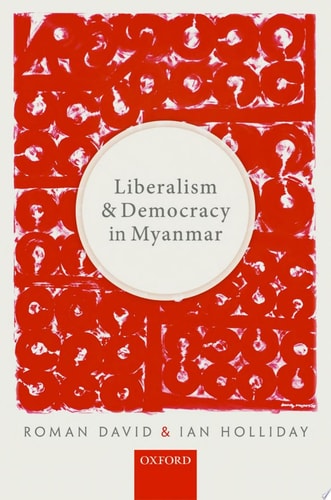
Liberalism and Democracy in Myanmar
0
0
As an Amazon Associate and affiliate partner, Menrva Books earns from qualifying purchases. Learn more
Author Description
Historic Myanmar elections in November 2015 paved the way for an NLD government led by Aung San Suu Kyi to take office in March 2016, and saw the country deepen its graduated transition away from authoritarian rule. Nevertheless, military forces that for decades dominated national politics remain privileged in a constitutional framework designed to deliver 'discipline-flourishing democracy'. In August 2017, the military intensified its campaign of ethnic cleansing of Myanmar's Rohingya Muslim minority, and more than 750,000 refugees fled to neighbouring Bangladesh. One critical question that now confronts the fifty million people of this Southeast Asian nation is whether their push for greater democracy is strong enough to prevail over the resistance of a powerful military machine and swelling undercurrents of intolerance. What are the prospects for liberal democracy in Myanmar?This book addresses this question by examining historical conditions, constitutionalism, popular support for democracy, major political actors, group relations and tolerance, and transitional justice. To probe the meaning and purchase of key concepts it presents a rich array of evidence, including eighty-eight in-depth interviews and three waves of surveys and survey experiments conducted by the authors between 2014 and 2018, all of which are triangulated with constitutional and legal texts and reports issued locally and globally. The analysis culminates in the concept of limited liberalism, which reflects an at times puzzling blend of liberal and illiberal attitudes. The book concludes that a weakening of liberal commitments among politicians and citizens alike, allied with spreading limited liberal attitudes, casts doubt on the prospects for liberal democracy in Myanmar.
Menrva's Summary
THE THESIS
This book investigates the prospects for liberal democracy in Myanmar by analyzing the tension between the nation's democratic aspirations and the enduring influence of its military establishment. Authors Ian Holliday and Roman David, both established scholars in political science and human rights, utilize a multi-methodological approach to evaluate the country's political trajectory. By synthesizing constitutional analysis with original empirical data, they argue that the emergence of 'limited liberalism'—a hybrid of democratic and illiberal values—poses a significant barrier to full democratization.
THE SCOPE MAP
What You Will Find
- A comprehensive analysis of Myanmar's political transition from 2014 to 2018.
- Empirical data derived from eighty-eight in-depth interviews and three distinct waves of survey experiments.
- A critical examination of constitutional frameworks, ethnic relations, and the role of the military in governance.
- The conceptual framework of 'limited liberalism' as a tool for understanding contemporary political attitudes.
THE AUTHORITY PERSPECTIVE
Experts recognize this work as a rigorous, data-driven assessment of Myanmar's complex political landscape. Readers frequently note the academic density of the prose, which provides a necessary, nuanced counterpoint to superficial analyses of the country's democratic transition.
Page Count:
256
Publication Date:
2019-01-15
Publisher:
Oxford University Press
ISBN-10:
0198809603
ISBN-13:
9780198809609
History
Burma
Comparative Politics
Democracy
Liberalism
Human rights
Community Tags
Other Editions(3)
Similar Books
Reader Comments
Share Your Thoughts
No comments yet. Be the first to share your thoughts!