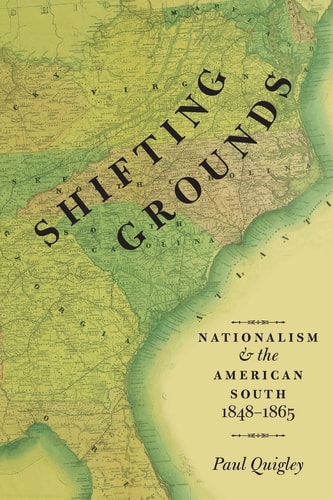
Shifting Grounds: Nationalism and the American South, 1848-1865
0
0
As an Amazon Associate and affiliate partner, Menrva Books earns from qualifying purchases. Learn more
Author Description
Between 1848 and 1865 white southerners felt the grounds of nationhood shift beneath their feet. The conflict over slavery that led to the Civil War forced them to confront the difficult problems of nationalism. What made a nation a nation? Could an individual or a group change nationality at will? What were the rights and responsibilities of national citizenship? Why should nations exist at all?As they contemplated these questions, white southerners drew on their long experience as Americans and their knowledge of nationalism in the wider world. This was true of not just the radical secessionists who shattered the Union in 1861, but also of the moderate majority who struggled to balance their southern and American loyalties. As they pondered the changing significance of the Fourth of July, as they fused ideals of masculinity and femininity with national identity, they revealed the shifting meanings of nationalism and citizenship. Southerners also looked across the Atlantic, comparing southern separatism with movements in Hungary and Ireland, and applying the European model of romantic nationalism first to the United States and later to the Confederacy.In the turmoil of war, the Confederacy's national government imposed new, stringent obligations of citizenship, while the shared experience of suffering united many Confederates in a sacred national community of sacrifice. For Unionists, die-hard Confederates, and the large majority torn between the two, nationalism became an increasingly pressing problem. In Shifting Grounds Paul Quigley brilliantly reinterprets southern conceptions of allegiance, identity, and citizenship within the contexts of antebellum American national identity and the transatlantic "Age of Nationalism," shedding new light on the ideas and motivations behind America's greatest conflict.
Menrva's Summary
THE THESIS
How did white Southerners navigate the evolving concepts of nationhood, citizenship, and allegiance during the turbulent period between 1848 and 1865? Paul Quigley, a historian specializing in the American South, utilizes a wide array of primary sources, including personal correspondence, political discourse, and transatlantic intellectual exchanges, to argue that Southern nationalism was not a static ideology but a fluid response to the pressures of slavery, war, and global political shifts. He demonstrates that Southerners actively engaged with European models of romantic nationalism to define their own identity, ultimately revealing the complex tensions between their American heritage and their Confederate aspirations.
THE SCOPE MAP
What You Will Find
- Analysis of the transatlantic "Age of Nationalism" and its influence on Southern political thought.
- Examination of how gender ideals were integrated into the construction of national identity.
- Comparative study of Southern separatism alongside contemporary movements in Hungary and Ireland.
- Investigation into the shifting obligations of citizenship imposed by the Confederate government during wartime.
THE AUTHORITY PERSPECTIVE
Historians and scholars of the American Civil War frequently cite this work for its sophisticated integration of intellectual history with political analysis. Readers often note the academic density of the prose, which provides a rigorous examination of how nineteenth-century Southerners conceptualized their place in the world.
Page Count:
344
Publication Date:
2014-04-01
Publisher:
Oxford University Press
ISBN-10:
0199376476
ISBN-13:
9780199376476
History
Civil War
Nationalism
American History
Group Identity
Southern States
Regionalism
Community Tags
Other Editions(2)

Similar Books






Reader Comments
Share Your Thoughts
No comments yet. Be the first to share your thoughts!