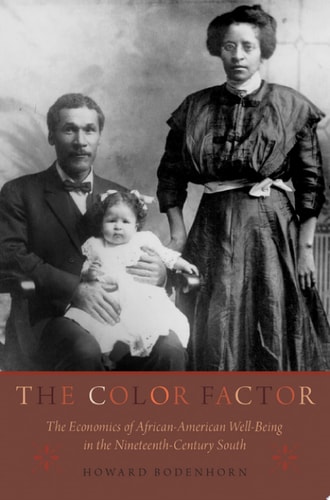
The Color Factor: The Economics of African-American Well-Being in the Nineteenth-Century South
0
0
As an Amazon Associate and affiliate partner, Menrva Books earns from qualifying purchases. Learn more
Author Description
Despite The Many Advances That The United States Has Made In Racial Equality Over The Past Half Century, Numerous Events Within The Past Several Years Have Proven Prejudice To Be Alive And Well In Modern-day America. In One Such Example, Governor Nikki Haley Of South Carolina Dismissed One Of Her Principal Advisors In 2013 When His Membership In The Ultra-conservative Council Of Conservative Citizens (ccc) Came To Light. According To The Southern Poverty Law Center, In 2001 The Ccc Website Included A Message That Read God Is The One Who Divided Mankind Into Different Races.... Mixing The Races Is Rebelliousness Against God. This Episode Reveals America's Continuing Struggle With Race, Racial Integration, And Race Mixing-a Problem That Has Plagued The United States Since Its Earliest Days As A Nation. The Color Factor: The Economics Of African-american Well-being In The Nineteenth-century South Demonstrates That The Emergent Twenty-first-century Recognition Of Race Mixing And The Relative Advantages Of Light-skinned, Mixed-race People Represent A Re-emergence Of One Salient Feature Of Race In America That Dates To Its Founding. Economist Howard Bodenhorn Presents The First Full-length Study Of The Ways In Which Skin Color Intersected With Policy, Society, And Economy In The Nineteenth-century South. With Empirical And Statistical Rigor, The Investigation Confirms That Individuals Of Mixed Race Experienced Advantages Over African Americans In Multiple Dimensions - In Occupations, Family Formation And Family Size, Wealth, Health, And Access To Freedom, Among Other Criteria. The Color Factor Concludes That We Will Not Really Understand Race Until We Understand How American Attitudes Toward Race Were Shaped By Race Mixing. The Text Is An Ideal Resource For Students, Social Scientists, And Historians, And Anyone Hoping To Gain A Deeper Understanding Of The Historical Roots Of Modern Race Dynamics In America.
Menrva's Summary
THE THESIS
How did skin color and race mixing influence the economic and social outcomes for African Americans in the nineteenth-century South? Economist Howard Bodenhorn utilizes extensive statistical analysis and historical data to argue that light-skinned, mixed-race individuals consistently held systemic advantages over their darker-skinned counterparts. By examining the intersection of policy, labor, and family structure, the author demonstrates that these historical disparities established a foundational framework for racial dynamics that persists in contemporary American society.
THE SCOPE MAP
What You Will Find
- Quantitative analysis of wealth, health, and occupational attainment among nineteenth-century Southerners.
- Examination of how skin color influenced access to freedom and legal status.
- Historical investigation into family formation patterns and household size based on racial categorization.
- A comprehensive study of the economic implications of race mixing in the antebellum and post-Civil War South.
THE AUTHORITY PERSPECTIVE
Scholars and historians recognize this work as a rigorous empirical study that fills a significant gap in the economic history of the American South. Readers frequently note the density of the statistical data, which provides a robust foundation for understanding the long-term socioeconomic consequences of racial stratification.
Page Count:
336
Publication Date:
2015-01-01
Publisher:
Oxford University Press
ISBN-10:
019938312X
ISBN-13:
9780199383122
History
Economics
Sociology
Community Tags
Other Editions(2)
Similar Books











Reader Comments
Share Your Thoughts
No comments yet. Be the first to share your thoughts!