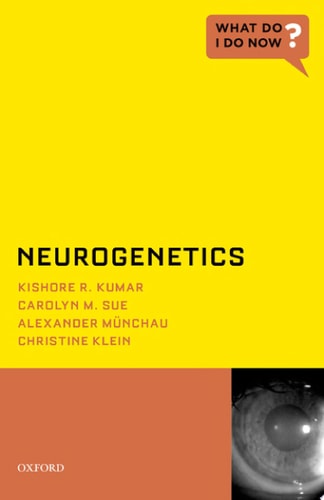
Neurogenetics: What Do I Do Now
0
0
As an Amazon Associate and affiliate partner, Menrva Books earns from qualifying purchases. Learn more
Author Description
AimsTo some, the field of neurogenetics appears perplexing and indecipherable. In this volume, we will address this issue by providing clinicians with a framework for dealing with these disorders. This book is not intended to be an in-depth, comprehensive review of all neurogenetic conditions from 'A to Z'. Instead, we will provide a concise discussion using case studies to illustrate the most important and topical neurogenetic disorders. This case-based approach will make the book easy to reference, clinically relevant, approachable, and, we feel, more interesting. ScopeThe contribution of genetics to many neurological diseases is becoming increasingly apparent, and so it is imperative to stay up-to-date with these conditions. The 31 chapters in this volume cover a wide range of inherited conditions including forms of dystonia, Parkinson disease, spastic paraplegias, mitochondrial diseases, myopathies, neuropathies, and much more. Particular attention is paid to practical issues regarding how to make a genetic diagnosis and how to counsel the family. We will also address some contemporary issues in neurogenetics, such as the impact of direct-to-consumer genetic testing. General ApproachIn keeping with the WDIDN series, each chapter commences with a brief case study, which will be used as an example of an important condition in neurogenetics. The discussion will then be centered on the case, with a focus on crucial issues regarding the clinical assessment, investigations and management of these conditions. Key clinical points will be listed at the end of the chapter, along with a list of suggested further reading. All case studies in this book are based on real patients seen by the authors or their colleagues.
Menrva's Summary
THE THESIS
This volume investigates how clinicians can effectively navigate the complex landscape of neurogenetic disorders through a practical, case-based diagnostic framework. The authors, a team of medical experts including Alexander M, Carolyn Sue, Christine Klein, and Kishore Kumar, argue that the rapid integration of genetics into neurology requires a shift from encyclopedic memorization to applied clinical reasoning. By utilizing real-world patient scenarios, the text provides a structured methodology for diagnosis, family counseling, and the management of inherited neurological conditions.
THE SCOPE MAP
What You Will Find
- Clinical analysis of 31 distinct inherited conditions including dystonia, Parkinson disease, and mitochondrial disorders.
- A standardized chapter structure featuring initial case studies followed by diagnostic and management strategies.
- Practical guidance on navigating genetic testing, including the implications of direct-to-consumer services.
- Evidence-based clinical summaries and curated reading lists for further professional development.
THE AUTHORITY PERSPECTIVE
Clinicians frequently highlight this text as a highly accessible resource for bridging the gap between genetic theory and bedside practice. Experts note that the case-based format serves as an effective tool for both trainees and established neurologists seeking to refine their diagnostic approach to rare inherited diseases.
Page Count:
208
Publication Date:
2014-01-01
Publisher:
Oxford University Press
ISBN-10:
019938391X
ISBN-13:
9780199383917
Neurology
Reference
Medical
Allied Health
Genetics
Community Tags
Similar Books