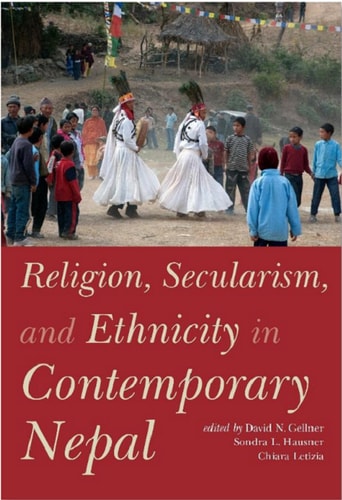
Religion, Secularism, and Ethnicity in Contemporary Nepal
0
0
As an Amazon Associate and affiliate partner, Menrva Books earns from qualifying purchases. Learn more
Author Description
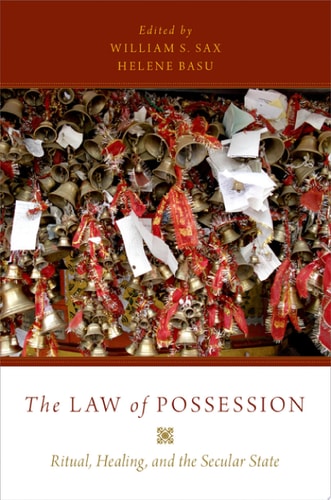
Nepal has passed through dramatic changes in the last thirty years, including a Maoist revolution, the transition from monarchy to republic, three new constitutions, the declaration of secularism, and intense globalization. What happens to religion under conditions of rapid social and political change? Is religion still a valid means of coping with the world? How do citizens of the former Hindu kingdom understand secularism? How do changing public festivals reflect and/or create new group identities? Is religion becoming more privatized? Is the link to healing practices transforming or not, and if so, how? Is the gap narrowing between the cultural worlds of town and country?In an attempt to answer these questions, twelve anthropologists and ethno-Indologists of Nepal provide case studies focused on secularism, secularization, individualism, spirit possession, animal sacrifice, the role of state functionaries in festivals, the creation of new ethnic festivals, clashes and synergies between Maoism and Buddhism, and conversion to Christianity. In his Afterword Rajeev Bhargava analyses the experience of Nepal in comparative perspective and asks whether Nepal is finding its own solution to the conundrum of secularism.
Menrva's Summary
THE THESIS
This volume investigates how the rapid political and social transformations in Nepal, including the transition from a Hindu monarchy to a secular republic, have reshaped the role and practice of religion. The authors, a collective of anthropologists and ethno-Indologists, utilize empirical case studies to examine the intersection of secularism, ethnic identity, and traditional belief systems. By analyzing the shifting landscape of public festivals, state functionaries, and individual spiritual practices, the text argues that religion in Nepal is undergoing a complex, non-linear evolution rather than a simple process of privatization or decline.
THE SCOPE MAP
What You Will Find
- Analysis of the transition from a Hindu kingdom to a secular republic and its impact on citizen identity.
- Examination of diverse religious phenomena including spirit possession, animal sacrifice, and conversion to Christianity.
- Case studies detailing the interplay between Maoist ideology and traditional Buddhist practices.
- Comparative perspectives on secularism provided by political theorist Rajeev Bhargava.
THE AUTHORITY PERSPECTIVE
Scholars in the field of South Asian studies recognize this work as a significant contribution to the understanding of secularization in non-Western contexts. The text is frequently cited for its rigorous ethnographic detail and its ability to bridge the gap between local religious practices and national political shifts.
Page Count:
482
Publication Date:
2016-10-01
Publisher:
Oxford University Press
ISBN-10:
0199467722
ISBN-13:
9780199467723
Religion
Anthropology
Sociology
Asia
Nepal
Community Tags
Other Editions(3)
Similar Books