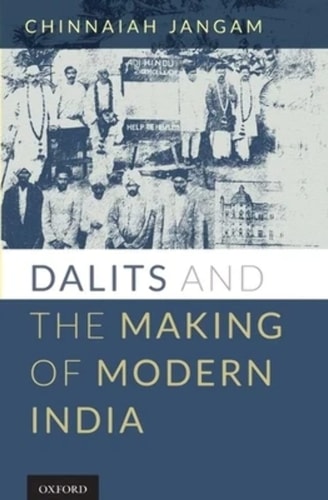
Dalits and the Making of Modern India
0
0
As an Amazon Associate and affiliate partner, Menrva Books earns from qualifying purchases. Learn more
Author Description
This book inverts the dominant nationalist narrative and shines light on the silenced voices and unacknowledged contributions of Dalits towards the collective imagination of nation in India. By using colonial archives, Telugu Dalit writings and their political activities, this book presents a Dalit perspective on nationalism. It argues that similar to caste Hindus, Dalits were embedded both in the politics and in the imagination of nation. Through critical arguments and with an ethical imagination, Dalits altered the meaning of nation and brought the stigma of untouchability to the forefront of nationalist politics. They exposed the inhumanity of caste and the indignities enforced by Hindu Brahmanical ideology. Empowered by anti-caste historical legacies and the philosophy of enlightenment, Dalits argued for the abolition of untouchability, caste inequality and accompanied humiliations as a precondition for Independence. Unlike caste Hindus, Dalits imagined a nation on the basis of ethical and egalitarian principles of justice, liberty, equality and human dignity, which became the foundational principles of the Indian Constitution drafted by Dr. B. R. Ambedkar. The ideas and arguments that emerged during the colonial period resonate in the contemporary debates in India as Dalits continue to challenge their marginalization and mistreatment as violations of the Constitution.
Menrva's Summary
THE THESIS
This book investigates how Dalit political activism and intellectual contributions fundamentally reshaped the conceptualization of Indian nationalism during the colonial era. Chinnaiah Jangam, a scholar of Dalit history, utilizes a combination of colonial archives and vernacular Telugu Dalit literature to challenge traditional nationalist historiography. He argues that Dalits were not passive observers but active participants who demanded that the abolition of caste-based inequality be a prerequisite for national independence. By centering the philosophy of human dignity, the author demonstrates how these efforts provided the ethical framework for the modern Indian Constitution.
THE SCOPE MAP
What You Will Find
- Analysis of colonial-era archives and primary source documents regarding Dalit political movements.
- Examination of Telugu Dalit writings and their influence on the broader nationalist discourse.
- Critique of Brahmanical ideology and its impact on the social structure of pre-independence India.
- Exploration of the transition from anti-caste activism to the constitutional principles championed by Dr. B. R. Ambedkar.
THE AUTHORITY PERSPECTIVE
Scholars recognize this work as a significant contribution to subaltern studies, providing a necessary corrective to mainstream historical narratives. The text is frequently cited for its rigorous use of vernacular sources and its clear articulation of the intellectual history of the Dalit movement.
Page Count:
264
Publication Date:
2019-02-06
Publisher:
Oxford University Press
ISBN-10:
0199477779
ISBN-13:
9780199477777
History
Politics
Dalits
Sociology
India
Nationalism
Social justice
Community Tags
Similar Books