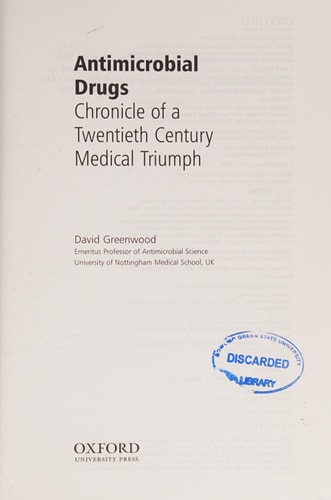
Antimicrobial Drugs: Chronicle of a Twentieth Century Medical Triumph
0
0
As an Amazon Associate and affiliate partner, Menrva Books earns from qualifying purchases. Learn more
Author Description
Between 1935 and 1944 the field of microbiology, and by implication medicine as a whole, underwent dramatic advancement. The discovery of the extraordinary antibacterial properties of sulphonamides, penicillin, and streptomycin triggered a frantic hunt for more antimicrobial drugs that was to yield an abundant harvest in a very short space of time. By the early 1960s more than 50 antibacterial agents were available to the prescribing physician and, largely by a process of chemical modification of existing compounds, that number has more than tripled today. We have become so used to the ready availability of these relatively safe and highly effective 'miracle drugs' that it is now hard to grasp how they transformed the treatment of infection.This book documents the progress made from the first tentative search for an elusive 'chemotherapy' of infection in the early days of the twentieth century, to the development of effective antiviral agents for the management of HIV as the millennium drew to a close. It also offers a celebration of the individuals and groups that made this miracle happen, as well as examining the inexorable rise of the global pharmaceutical industry, and, most intriguingly, the essential input of luck.Infection still maintains a high profile in both medicine and the media, with the current threats of 'superbugs' such as MRSA acquired in hospital, and a potential resistance to antibiotics. This book tracks the history of antimicrobial drugs, a remarkable medical triumph that has provided doctors with an amazing armoury of safe and effective drugs that ensure that reversion to the helpless state of the fight against infection witnessed in the early 1900s is extremely unlikely. This timely compendium acknowledges the agents that have surely led to the relief of more human and animal suffering than any other class of drugs in the history of medical endeavour.
Menrva's Summary
THE THESIS
This book investigates the rapid evolution of antimicrobial chemotherapy throughout the twentieth century and the subsequent transformation of medical practice. David Greenwood, a distinguished expert in medical microbiology, utilizes historical records and scientific documentation to trace the development of antibacterial agents from early sulfonamides to modern antiviral treatments. The text argues that the success of these drugs resulted from a combination of rigorous scientific inquiry, the rise of the pharmaceutical industry, and significant elements of serendipity.
THE SCOPE MAP
What You Will Find
- A chronological history of antimicrobial drug development from 1935 to the late 1990s.
- Analysis of the transition from early chemical research to the modern pharmaceutical industry.
- Case studies of major breakthroughs including penicillin, streptomycin, and HIV treatments.
- Examination of the ongoing challenges posed by antibiotic resistance and hospital-acquired infections.
THE AUTHORITY PERSPECTIVE
Experts recognize this work as a comprehensive and authoritative chronicle of medical progress in the field of infectious disease. Readers frequently note the balance between technical scientific detail and accessible historical narrative, making it a foundational text for those interested in the history of medicine.
Page Count:
368
Publication Date:
2008-04-22
Publisher:
Oxford University Press
ISBN-10:
0199534845
ISBN-13:
9780199534845
History
Science
Microbiology
Medicine
Pharmacology
Community Tags
Similar Books