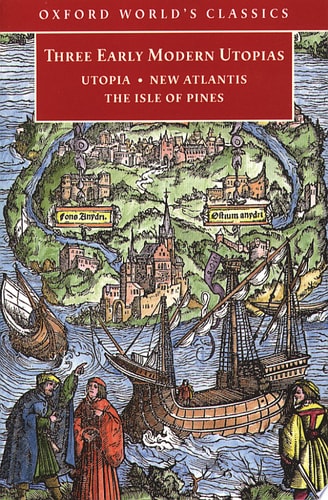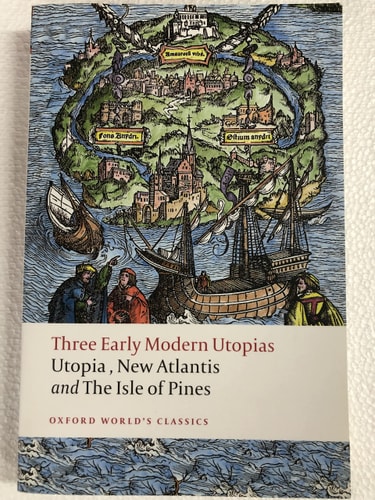
Three Early Modern Utopias: Utopia, New Atlantis, and The Isle of Pines
0
0
As an Amazon Associate and affiliate partner, Menrva Books earns from qualifying purchases. Learn more
Author Description
With the publication of Utopia (1516), Thomas More provided a scathing analysis of the shortcomings of his own society, a realistic suggestion for an alternative mode of social organization, and a satire on unrealistic idealism. Enormously influential, it remains a challenging as well as a playful text. This edition reprints Ralph Robinson's 1556 translation from More's original Latin together with letters and illustrations that accompanied early editions of Utopia.This edition also includes two other, hitherto less accessible, utopian narratives. New Atlantis (1627) offers a fictional illustration of Francis Bacon's visionary ideal of the role that science should play in the modern society. Henry Neville's The Isle of Pines (1668), a precursor of Defoe's Robinson Crusoe, engages with some of the sexual, racial, and colonialist anxieties of the end of the early modern period. Bringing together these three New World texts, and situating them in a wider Renaissance context, this edition--which includes letters, maps, and alphabets that accompanied early editions--illustrates the diversity of the early modern utopian imagination, as well as the different purposes to which it could be put.About the Series: For over 100 years Oxford World's Classics has made available the broadest spectrum of literature from around the globe. Each affordable volume reflects Oxford's commitment to scholarship, providing the most accurate text plus a wealth of other valuable features, including expert introductions by leading authorities, voluminous notes to clarify the text, up-to-date bibliographies for further study, and much more.
Menrva's Summary
THE THESIS
This collection investigates the evolution of the utopian genre during the early modern period by examining how three distinct authors utilized fictional narratives to critique contemporary social, scientific, and colonial structures. The editors provide a scholarly framework that situates these texts within the broader Renaissance intellectual climate, offering readers a comparative look at how More, Bacon, and Neville used the concept of the 'New World' to project their own societal ideals and anxieties. By presenting these works alongside original letters, maps, and illustrations, the volume serves as a critical resource for understanding the shifting political and philosophical priorities of the 16th and 17th centuries.
THE SCOPE MAP
What You Will Find
- Primary texts of Thomas More's Utopia, Francis Bacon's New Atlantis, and Henry Neville's The Isle of Pines.
- Historical context regarding the development of early modern political thought and colonial expansion.
- Scholarly apparatus including expert introductions, detailed annotations, and bibliographies for further research.
- Original supplementary materials such as period-specific maps, alphabets, and correspondence.
THE AUTHORITY PERSPECTIVE
Scholars and students frequently cite this volume as a foundational resource for comparing the diverse manifestations of early modern utopian thought. The inclusion of academic commentary and historical context makes it a standard text for those studying the intersection of literature and political philosophy.
Page Count:
320
Publication Date:
2009-01-15
Publisher:
Oxford University Press
ISBN-10:
0199537992
ISBN-13:
9780199537990
History
Classics
Philosophy
Utopian
Utopias
Renaissance
Community Tags
Similar Books