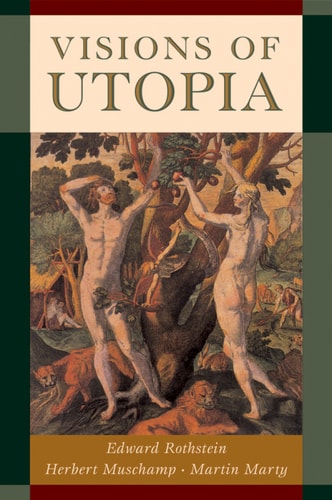
Visions of Utopia: New York Public Library Lectures in Humanities
0
0
As an Amazon Associate and affiliate partner, Menrva Books earns from qualifying purchases. Learn more
Author Description
From the sex-free paradise of the Shakers to the worker's paradise of Marx, utopian ideas seem to have two things in common--they all are wonderfully plausible at the start and they all end up as disasters. In Visions of Utopia, three leading cultural critics--Edward Rothstein, Martin Marty, and Herbert Muschamp--look at the history of utopian thinking, exploring why they fail and why they are still worth pursuing. Edward Rothstein, New York Times cultural critic, contends that every utopia is really a dystopia--a disaster in the making--one that overlooks the nature of humanity and the impossibilities of paradise. He traces the ideal in politics and technology and suggests that only in art--and especially in music--does the desire for utopia find satisfaction. Martin Marty examines several models of utopia--from Thomas More's to a 1960s experimental city that he helped to plan--to show that, even though utopias can never be realized, we should not be too quick to condemn them. They can express dimensions of the human spirit that might otherwise be stifled and can plant ideas that may germinate in more realistic and practical soil. And Herbert Muschamp, the New York Times architectural critic, looks at Utopianism as exemplified in two different ways: the Buddhist tradition and the work of visionary Viennese architect Adolph Loos. Utopian thinking embodies humanity's noblest impulses, yet it can lead to horrors such as Nazi Germany and the Soviet Regime. In Visions of Utopia, these leading thinkers offer an intriguing look at the paradoxes of paradise.
Menrva's Summary
THE THESIS
This work investigates the inherent paradox of utopian thought, questioning why visions of a perfect society consistently fail while remaining a persistent feature of human aspiration. The authors, all distinguished cultural critics, utilize historical analysis, architectural theory, and theological perspectives to argue that while utopias often result in catastrophic outcomes, they serve as vital expressions of the human spirit that can inform more practical societal improvements.
THE SCOPE MAP
What You Will Find
- Historical analysis of utopian models ranging from the Shakers to Marxist worker paradises.
- Architectural critiques of visionary designs, including the work of Adolph Loos.
- Theological and cultural examinations of the human impulse toward perfection.
- Comparative studies of political and technological utopianism.
Scope Limits
- The text does not provide a comprehensive history of every utopian movement in existence.
- It does not offer a prescriptive manual for building a functional society.
THE AUTHORITY PERSPECTIVE
Critics and readers frequently note that the book provides a sophisticated, multi-disciplinary examination of a complex philosophical subject. Experts highlight the text as a valuable resource for those interested in the intersection of cultural criticism, architecture, and political history.
Page Count:
101
Publication Date:
2003-01-01
Publisher:
Oxford University Press
ISBN-10:
019028689X
ISBN-13:
9780190286897
Philosophy
Architecture
History
Religion
History of Architecture
Modern History
Social Theory
Professional Career & Trade
Utopias
Community Tags
Similar Books