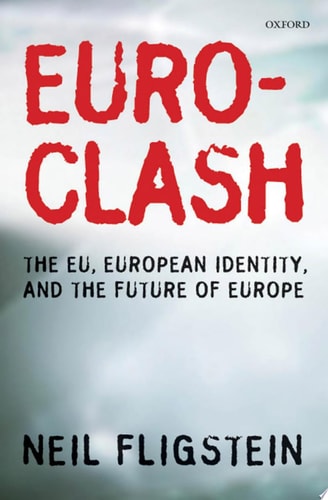
Euroclash: The EU, European Identity, and the Future of Europe
0
0
As an Amazon Associate and affiliate partner, Menrva Books earns from qualifying purchases. Learn more
Author Description
The European Union's market integration project has dramatically altered economic activity around Europe. This book presents extensive evidence on how trade has increased, jobs have been created, and European business has been reorganized. The changes in the economy have been accompanied by dramatic changes in how people from different societies interact. This book argues provocatively that these changes have produced a truly transnational-European-society.The book explores the nature of that society and its relationship to the creation of a European identity, popular culture, and politics. Much of the current political conflict around Europe can be attributed to who is and who is not involved in European society. Business owners, managers, professionals, white-collar workers, the educated, and the young have all benefited from European economic integration, specifically by interacting more and more with their counterparts in other societies. They tend to think of themselves as Europeans. Older, poorer, less educated, and blue-collar citizens have benefited less. They view the EU as intrusive on national sovereignty, or they fear its pro-business orientation will overwhelm the national welfare states. They have maintained national identities. There is a third group of mainly-middle class citizens who see the EU in mostly positive terms and sometimes--but not always--think of themselves as Europeans. It is this swing group that is most critical for the future of the European project. If they favor more European cooperation, politicians will oblige. But, if they prefer that policies remain wedded to the nation, European cooperation will stall.
Menrva's Summary
THE THESIS
This book investigates whether the European Union's economic integration project has successfully fostered a unified European identity or if it has deepened social and political divisions. Neil Fligstein, a professor of sociology, utilizes extensive empirical data and sociological frameworks to analyze how market integration has reorganized European business and social interaction. He argues that the benefits of this integration are unevenly distributed, creating a distinct divide between those who identify as European and those who remain tethered to national identities. The work examines how this social stratification influences the future trajectory of European political cooperation.
THE SCOPE MAP
What You Will Find
- Analysis of economic integration and its impact on job creation and business reorganization.
- Sociological classification of European citizens based on their engagement with the EU.
- Examination of the relationship between transnational social interaction and the formation of a European identity.
- Assessment of the political influence of the middle-class swing group on the future of European policy.
THE AUTHORITY PERSPECTIVE
Experts recognize this work as a significant sociological contribution to the study of European integration and identity formation. Readers frequently note the clarity of the author's argument regarding the socio-economic divide that shapes contemporary European political conflict.
Page Count:
296
Publication Date:
2008-06-15
Publisher:
Oxford University Press
ISBN-10:
0199542562
ISBN-13:
9780199542567
Economics
Politics
Globalization
European Union
European cooperation
Group Identity
Comparative Politics
Sociology
International relations
Community Tags
Similar Books