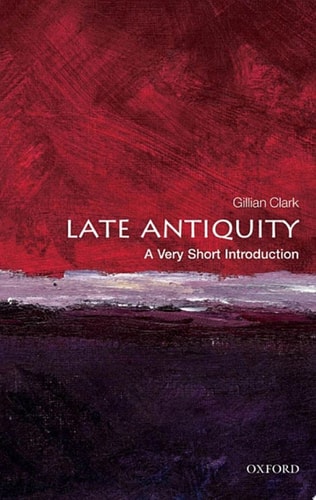
Late Antiquity: A Very Short Introduction
0
0
As an Amazon Associate and affiliate partner, Menrva Books earns from qualifying purchases. Learn more
Author Description
Late antiquity saw the barbarian invasions overrun the western Roman empire and Persian and Arab armies end Roman rule over the eastern and southern coasts of the Mediterranean. Was late antiquity therefore merely a time of decline? In this vibrant and compact introduction, Gillian Clark sheds light on the concept of late antiquity and the events of its time, showing that this was in fact a period of great transformation. Late antiquity saw Roman law codified, Christian creeds formulated, the Talmud compiled, and the Qur'an composed. If the Goths sacked the city of Rome, the Vandals built churches in Africa and Attila the Hun received an embassy from Constantinople. Anthony of Egypt and Simeon Stylites offered spectacular new models of holiness, while Augustine and Basil and Benedict devised rules for monastic communities. Late antique artists produced the mosaics of Ravenna and the first dome of Hagia Sophia. And it was also the period when emperors Diocletian in the third century and Justinian in the sixth enacted extensive and much-needed reforms of government.
Menrva's Summary
THE THESIS
Does the period of late antiquity represent a terminal decline of the Roman Empire, or a distinct era of cultural and political transformation? Gillian Clark, a distinguished scholar of classical history, examines the transition from the classical world to the medieval period. By synthesizing archaeological evidence and primary texts, she argues that the era was defined by significant intellectual, religious, and administrative evolution rather than mere collapse.
THE SCOPE MAP
What You Will Find
- Analysis of the political shifts from the third-century reforms of Diocletian to the sixth-century reign of Justinian.
- Examination of the development and codification of major religious texts, including the Talmud and the Qur'an.
- Discussion of cultural shifts in art, architecture, and the emergence of new models of monastic holiness.
- Evaluation of the impact of barbarian migrations and the changing borders of the Roman Empire.
THE AUTHORITY PERSPECTIVE
Experts frequently cite this work as a concise and accessible entry point for students and general readers interested in the complexities of the late antique period. The text is noted for its ability to distill dense historical debates into a clear, thematic framework that challenges traditional narratives of decline.
Page Count:
152
Publication Date:
2011-03-22
Publisher:
Oxford University Press
ISBN-10:
0199546207
ISBN-13:
9780199546206
Religion
History
Sociology
Ancient History
History - Ancient