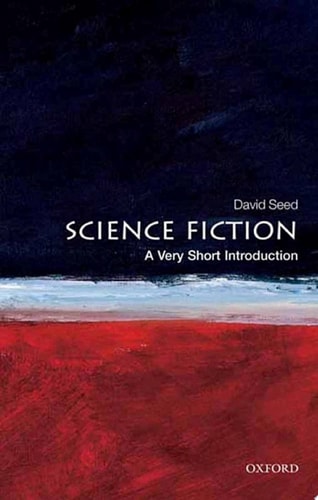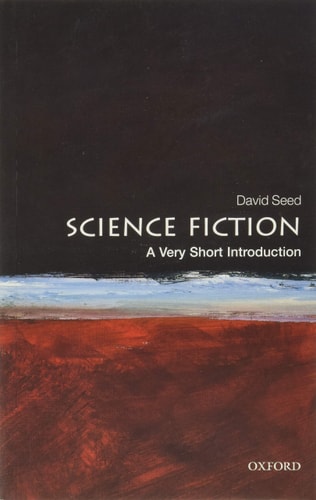
Science Fiction: A Very Short Introduction
0
0
As an Amazon Associate and affiliate partner, Menrva Books earns from qualifying purchases. Learn more
Author Description
Frankenstein, The Time Machine, Star Trek, Dune, 1984, Blade Runner--science fiction has been explained as a combination of romance, science, and prophecy; as a genre based on an imagined alternative to the reader's environment; and as a form of fantastic fiction and historical literature. It has also been argued that science fiction narratives are the most engaged, socially relevant, and responsive to the modern technological environment. In this Very Short Introduction, David Seed doesn't offer a history of science fiction, but instead attempts to tie examples of science fiction to different historical moments, in order to demonstrate how science fiction has evolved over time, especially the emergence of science fiction as a popular genre in the 20th century. Seed looks not only at literature, but also at drama and poetry, as well as film. Examining recurrent themes in science fiction, he looks at voyages into space, the concept of the alien and alternative social identities, the role of technology in science fiction, and its relation to time--in the past, present, and future.About the Series: Combining authority with wit, accessibility, and style, Very Short Introductions offer an introduction to some of life's most interesting topics. Written by experts for the newcomer, they demonstrate the finest contemporary thinking about the central problems and issues in hundreds of key topics, from philosophy to Freud, quantum theory to Islam.
Menrva's Summary
THE THESIS
This book investigates how science fiction functions as a responsive cultural mirror that evolves alongside modern technological and historical shifts. Author David Seed, a scholar of science fiction and literature, avoids a linear chronological history to instead analyze the genre through its thematic engagement with specific historical moments. He argues that science fiction is a uniquely adaptive form of literature, drama, and film that reflects the anxieties and aspirations of the 20th century and beyond. By examining the interplay between narrative and reality, Seed provides a framework for understanding the genre's role in shaping our perception of the future.
THE SCOPE MAP
What You Will Find
- Analysis of foundational texts including Frankenstein, The Time Machine, and 1984.
- Examination of cross-media manifestations, covering literature, poetry, drama, and film.
- Exploration of core thematic pillars such as space exploration, alien contact, and temporal manipulation.
- Discussion of the genre's evolution as a popular cultural force in the 20th century.
THE AUTHORITY PERSPECTIVE
Experts and readers frequently cite this work as a concise, high-level entry point for those seeking to understand the academic study of science fiction. The text is noted for its accessible prose and its ability to synthesize complex cultural trends into a manageable format for newcomers to the genre.
Page Count:
147
Publication Date:
2011-07-14
Publisher:
Oxford University Press
ISBN-10:
0199557454
ISBN-13:
9780199557455
Non-Fiction
Science Fiction
History
Science Fiction
Literary Criticism