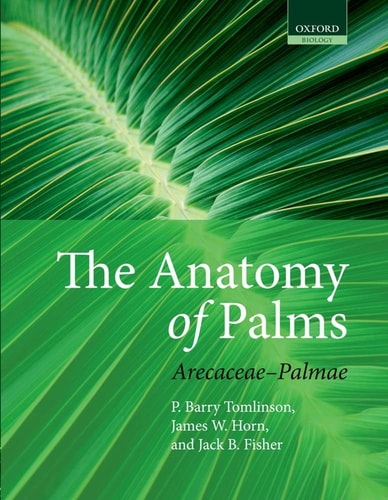
The Anatomy of Palms: Arecaceae - Palmae
0
0
As an Amazon Associate and affiliate partner, Menrva Books earns from qualifying purchases. Learn more
Author Description
Palms are an economically important group of plants and support major agronomic and horticultural industries, quite apart from their regional use in the cultures of many tropical countries as sources of food, fibre, and building materials. Although easily recognized and limited by a lack of secondary growth, they range widely in size, life form, and habitat. The Anatomy of Palms provides an extensive survey of the structure and vegetative anatomy of members of the palm family (Arecaceae or Palmae) and uses the most recent molecular phylogenetic treatment of the family as the basis for interpreting the systematic and ecological significance of anatomical characters.The first section (Palm Structure) starts with a description of the often distinctive anatomical techniques used, followed by the principles of palm development, a series of chapters on the microscopic anatomy of all the main organs, and finally an analysis of how these structures might have evolved. The second section (Systematic Anatomy) documents the systematic anatomical variation found in the subfamilies, tribes, and subtribes. The internal structure of all vegetative organs is reviewed, although lamina anatomy is emphasized. In those cases where genera are anatomically distinctive, they are described in detail. The intrinsic novelty of this approach is the innovative synthesis of the latest structural information for all genera of palms, set in a contemporary molecular phylogenetic context.
Menrva's Summary
THE THESIS
This work investigates the complex vegetative anatomy of the Arecaceae family to determine how structural characteristics correlate with ecological adaptation and phylogenetic evolution. The authors, experts in plant anatomy and morphology, utilize a comprehensive dataset derived from microscopic analysis of palm organs. By integrating this anatomical data with contemporary molecular phylogenetic frameworks, the text provides a systematic interpretation of how these plants have developed their unique biological forms without secondary growth.
THE SCOPE MAP
What You Will Find
- Detailed microscopic analysis of vegetative organs including roots, stems, and leaves.
- A systematic review of anatomical variation across subfamilies, tribes, and subtribes.
- Methodological chapters detailing specific techniques for palm tissue preparation and study.
- An evolutionary analysis of structural development within the Arecaceae family.
THE AUTHORITY PERSPECTIVE
Experts recognize this volume as a foundational reference for botanical researchers and horticulturalists specializing in tropical flora. Readers frequently note the high level of technical density and the precision of the anatomical descriptions provided throughout the text.
Page Count:
251
Publication Date:
2011-04-15
Publisher:
Oxford University Press
ISBN-10:
0199558922
ISBN-13:
9780199558926
Science
Plant Biology
Agriculture
Horticulture
Botany
Palms
Reference
Community Tags
Similar Books