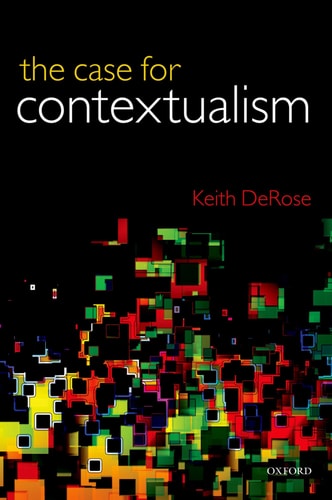
The Case for Contextualism: Knowledge, Skepticism, and Context, Vol. 1
0
0
As an Amazon Associate and affiliate partner, Menrva Books earns from qualifying purchases. Learn more
Author Description
It's an obvious enough observation that the standards that govern whether ordinary speakers will say that someone knows something vary with context: What we are happy to call "knowledge" in some ("low-standards") contexts we'll deny is "knowledge" in other ("high-standards") contexts. But do these varying standards for when ordinary speakers will attribute knowledge, and for when they are in some important sense warranted in attributing knowledge, reflect varying standards for when it is or would be true for them to attribute knowledge? Or are the standards that govern whether such claims are true always the same? And what are the implications for epistemology if these truth-conditions for knowledge claims shift with context? Contextualism is the view that the epistemic standards a subject must meet, in order for a claim attributing "knowledge" to her to be true, do vary with context. This has been hotly debated in epistemology and philosophy of language during the last few decades. In The Case for Contextualism Keith DeRose offers a sustained state-of-the-art exposition and defense of the contextualist position, presenting and advancing the most powerful arguments in favor of the view and against its "invariantist" rivals, and responding to the most pressing objections facing contextualism.
Menrva's Summary
THE THESIS
This work investigates whether the truth-conditions for knowledge claims shift based on the context of the speaker, challenging the traditional invariantist view in epistemology. Keith DeRose, a prominent philosopher, utilizes linguistic analysis and traditional epistemological puzzles to argue that standards for knowledge are context-sensitive. He constructs a rigorous defense of contextualism by addressing the logical implications of shifting standards and systematically dismantling common objections raised by proponents of invariantism.
THE SCOPE MAP
What You Will Find
- A detailed exposition of the contextualist framework regarding knowledge attribution.
- Comparative analysis between contextualist and invariantist theories of knowledge.
- Philosophical arguments addressing the problem of skepticism.
- Systematic responses to major objections against the contextualist position.
THE AUTHORITY PERSPECTIVE
Experts in the field recognize this text as a foundational defense of contextualism in contemporary epistemology. Readers frequently note the academic density of the prose, which is intended for advanced students and professional philosophers.
Page Count:
296
Publication Date:
2009-06-22
Publisher:
Oxford University Press
ISBN-10:
0199564469
ISBN-13:
9780199564460
Philosophy
Academic
Epistemology
Language
Logic