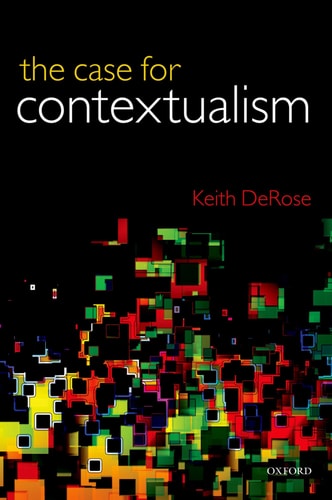
The Case for Contextualism: Knowledge, Skepticism, and Context, Vol. 1
0
0
As an Amazon Associate and affiliate partner, Menrva Books earns from qualifying purchases. Learn more
Author Description
It's an obvious enough observation that the standards that govern whether ordinary speakers will say that someone knows something vary with context: What we are happy to call "knowledge" in some ("low-standards") contexts we'll deny is "knowledge" in other ("high-standards") contexts. But do these varying standards for when ordinary speakers will attribute knowledge, and for when they are in some important sense warranted in attributing knowledge, reflect varying standards for when it is or would be true for them to attribute knowledge? Or are the standards that govern whether such claims are true always the same? And what are the implications for epistemology if these truth-conditions for knowledge claims shift with context? Contextualism is the view that the epistemic standards a subject must meet, in order for a claim attributing "knowledge" to her to be true, do vary with context. This has been hotly debated in epistemology and philosophy of language during the last few decades. In The Case for Contextualism Keith DeRose offers a sustained state-of-the-art exposition and defense of the contextualist position, presenting and advancing the most powerful arguments in favor of the view and against its "invariantist" rivals, and responding to the most pressing objections facing contextualism.
Menrva's Summary
THE THESIS
Does the truth-condition of knowledge claims shift based on the conversational context of the speaker? Keith DeRose, a prominent philosopher, examines the debate between contextualism and invariantism regarding epistemic standards. He provides a rigorous defense of the view that the standards for knowledge attribution are not fixed, but rather fluctuate depending on the context in which the claim is made.
THE SCOPE MAP
What You Will Find
- Analysis of the semantic and epistemic standards governing knowledge attribution.
- A detailed critique of invariantist theories of knowledge.
- Philosophical arguments addressing the skeptical challenges posed by contextual shifts.
- A comprehensive defense of contextualism against contemporary objections in epistemology.
THE AUTHORITY PERSPECTIVE
Experts in the field recognize this work as a foundational text for understanding the contextualist movement in modern epistemology. Readers frequently note the academic density of the prose, which is intended for those with a background in analytic philosophy.
Page Count:
304
Publication Date:
2011-05-05
Publisher:
Oxford University Press
ISBN-10:
0199692254
ISBN-13:
9780199692255
Philosophy
Academic
Language
Epistemology
Logic