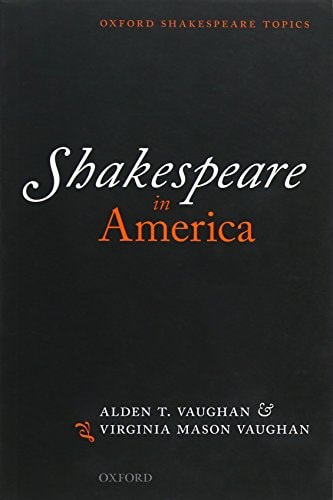
Shakespeare in America
0
0
As an Amazon Associate and affiliate partner, Menrva Books earns from qualifying purchases. Learn more
Author Description
This book traces Shakespeare's contributions to America's cultural history from the colonial era to the present, with substantial attention to theatre history, publishing history, and criticism.It identifies four broad themes that distinguish Shakespeare in the United States from the dramatist's reception in other countries. During the eighteenth and nineteenth centuries, Americans in search of self-improvement took a utilitarian approach to the plays, mining them for moral insights and everyday wisdom; beginning in the nineteenth century, American entrepreneurs collected, edited, and adapted Shakespeare for their own pleasure and profit; while America's public schools and theatre practitioners sought to make the works widely accessible; and throughout American history, Americans have had fun with Shakespeare in spoofs, parodies, and other appropriations and the collection of Shakespeare kitsch.Shakespeare in America also examines America's evolving awareness of Shakespeare, initially through the importation of his writings in the early eighteenth century, the staging a few decades later of English adaptations of the plays, and in the nineteenth century and beyond, through the promotion of Shakespeare and his works at Lyceums, Chautauquas, Shakespeare Clubs (both scholarly men's associations and more socially-oriented women's clubs), and America's literary 'renaissance' as championed by Emerson, Thoreau, Melville, Whitman, and others. The nineteenth century also witnessed growing attention to Shakespeare in schools, especially in William H McGuffey's Readers, and later in colleges, while simultaneously American familiarity with Shakespeare encouraged burlesques on stage, including the popular 'black' minstrel shows of the 1840s through 1870s.The twentieth century witnessed new organizations for promoting Shakespeare, such as the Shakespeare Association of America, and new venues for amateur and professional performances, such as Shakespeare summer festivals beginning in the 1930s and still going strong; and in new media for enjoying Shakespeare, such as feature films, Broadway musicals, and, toward the end of the twentieth century, radical adaptations of the plays on stage, on film, and in fiction, often aimed at persuading American youth that Shakespeare speaks to them. The story of Shakespeare in America is ever-changing.
Menrva's Summary
THE THESIS
This book investigates the unique trajectory of William Shakespeare's influence on American cultural history from the colonial period through the modern era. Alden T. Vaughan and Virginia Mason Vaughan, both distinguished scholars in the field of Shakespearean studies, utilize a vast array of primary sources including theatre records, publishing archives, and educational curricula. Their argument posits that the American reception of Shakespeare is defined by four distinct utilitarian, commercial, educational, and recreational themes that differentiate it from international traditions.
THE SCOPE MAP
What You Will Find
- Historical analysis of Shakespeare's reception from the eighteenth century to the present.
- Examination of the role of Shakespeare in American education, including McGuffey's Readers and college curricula.
- Documentation of the commercialization of Shakespeare through theatre, publishing, and the production of kitsch.
- Analysis of the cultural appropriation of Shakespeare in American literature, minstrel shows, and social clubs.
THE AUTHORITY PERSPECTIVE
Scholars and historians recognize this work as a foundational text for understanding the intersection of British literature and American cultural identity. Readers frequently note the academic density of the prose, which provides a comprehensive overview suitable for students and researchers of theatre history.
Page Count:
240
Publication Date:
2012-05-04
Publisher:
Oxford University Press
ISBN-10:
0199566372
ISBN-13:
9780199566372
History
American Studies
Literary Criticism
Theatre History
Community Tags
Other Editions(2)

Similar Books


Reader Comments
Share Your Thoughts
No comments yet. Be the first to share your thoughts!