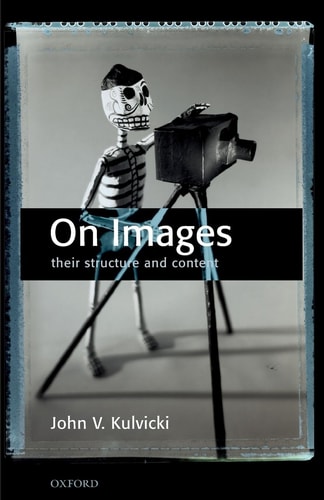
On Images: Their Structure and Content
0
0
As an Amazon Associate and affiliate partner, Menrva Books earns from qualifying purchases. Learn more
Author Description
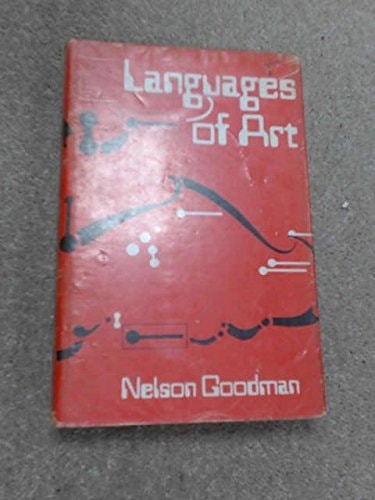
Whether it was the demands of life, leisure, or a combination of both that forced our hands, we have developed a myriad of artifacts--maps, notes, descriptions, diagrams, flow-charts, photographs, paintings, and prints--that stand for other things. Most agree that images and their close relatives are special because, in some sense, they look like what they are about. This simple claim is the starting point for most philosophical investigations into the nature of depiction.On Images, by contrast, argues that what it is to be a picture does not fundamentally concern how such representations can be perceived. What matters is not how we perceive representations but how they relate to one another. This kind of approach, first championed by Nelson Goodman in his Languages of Art, has not found many supporters, in part because of weaknesses with Goodman's account. On Images shows that a properly crafted structural account of pictures has many advantages over the perceptual accounts that dominate the literature on this topic. In particular, it explains the close relationship between pictures, diagrams, graphs and other kinds of non-linguistic representation. Kulvicki undermines the claim that pictures are essentially visual by showing how many kinds of non-visual representations, including audio recordings and tactile line drawings, are genuinely pictorial. Part Two shows that the structural account of depiction can help to explain why pictures seem so perceptually special, rather than taking that fact for granted. Based on these results, Part Three provides a new account of pictorial realism.
Menrva's Summary
THE THESIS
This book investigates the core question of what defines a picture, challenging the traditional assumption that depiction is fundamentally rooted in visual perception. John V. Kulvicki, a philosopher specializing in aesthetics and the philosophy of mind, builds upon the structuralist framework originally proposed by Nelson Goodman. By identifying the limitations of perceptual accounts, Kulvicki argues that the nature of depiction is better understood through the structural relationships between representations rather than the viewer's sensory experience.
THE SCOPE MAP
What You Will Find
- A structuralist framework for analyzing pictures, diagrams, and graphs.
- A comparative analysis of perceptual versus structural accounts of representation.
- An examination of non-visual pictorial forms, including audio recordings and tactile line drawings.
- A re-evaluation of pictorial realism based on structural properties.
THE AUTHORITY PERSPECTIVE
Experts in the field of aesthetics recognize this work as a significant contribution to the debate surrounding pictorial representation and the legacy of Nelson Goodman. Readers frequently note the technical density of the prose, which requires a strong background in analytic philosophy to fully grasp the author's arguments.
Page Count:
272
Publication Date:
2009-02-28
Publisher:
Oxford University Press
ISBN-10:
0199561672
ISBN-13:
9780199561674
Philosophy
Non-Fiction
Aesthetics
Art Theory
Epistemology
Art
Pictures
Community Tags
Other Editions(2)
Similar Books