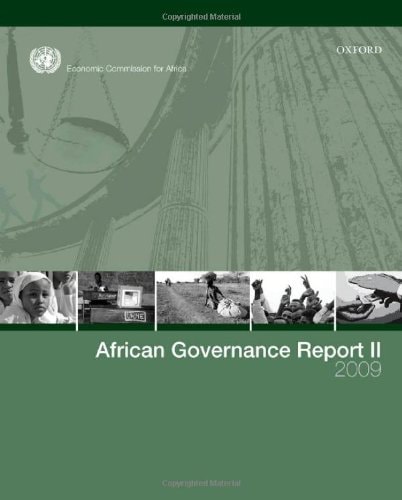
African Governance Report 2009
0
0
As an Amazon Associate and affiliate partner, Menrva Books earns from qualifying purchases. Learn more
Author Description
The African Governance Report, which assesses and monitors the progress of governance in Africa, is the most comprehensive periodic report on governance on the continent. This second edition of the report covers 35 African countries. The main finding of the report is that Africa within the last five years recorded marginal progress on governance. The gains on political governance have been mixed. While the scope for political representation and competitive electoral politics, human rights and the observance of rule of law have improved; party and electoral systems remain weak and poorly institutionalized, with elections emerging as a conflict trigger, rather than a conflict resolution mechanism. The accountability of the executive is on a slight increase, with countervailing checks from the other governance actors and institutions-state and non-state.The areas of the economy have witnessed progressive strides. Economic governance and public sector management and private sector development and corporate governance have been marked by progressive policies leading to a steady growth in the economies of many African countries. But challenges abound. The management of the tax system is poor, service delivery to most sections of the population remains unsatisfactory, and corruption is a major challenge to sustainable economic progress and development in Africa. Corruption undermines Africa's capacity to realize its full development potentials. Sustaining the modest progress on governance in Africa requires continuous capacity enhancement in key sectors of governance. Such capacity building should be in-ward looking, regionally and nationally based, and tap into Africa's rich human capital in the Diaspora.
Menrva's Summary
THE THESIS
This report investigates the current state and trajectory of governance across 35 African nations to determine the effectiveness of political and economic reforms. The United Nations Economic Commission for Africa utilizes a comprehensive assessment framework to analyze institutional progress, electoral integrity, and economic management. By evaluating both state and non-state actors, the report argues that while marginal gains have been achieved in political representation and economic policy, systemic weaknesses in accountability and public service delivery continue to hinder sustainable development.
THE SCOPE MAP
What You Will Find
- Comparative analysis of governance metrics across 35 African countries.
- Evaluation of electoral systems and their role in conflict or resolution.
- Assessment of public sector management and corporate governance frameworks.
- Identification of critical barriers including tax system inefficiencies and corruption.
THE AUTHORITY PERSPECTIVE
Experts and policymakers regard this report as a foundational document for understanding the institutional landscape of the continent during the late 2000s. Readers frequently note the technical density of the data, which serves as a primary reference for researchers focusing on African development and political reform.
Page Count:
274
Publication Date:
2009-09-28
Publisher:
Oxford University Press
ISBN-10:
0199574294
ISBN-13:
9780199574292
Politics
History
Economics
Public Policy
Kindle Store
Kindle eBooks
Systems Theory
Categories
Governance
Elections & Political Process
Africa
Development
World politics