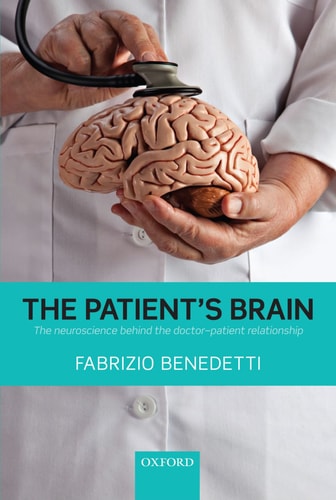
The Patient's Brain: The Neuroscience Behind the Doctor-Patient Relationship
0
0
As an Amazon Associate and affiliate partner, Menrva Books earns from qualifying purchases. Learn more
Author Description
There is a vast literature on what has often been called the doctor-patient relationship, patient-provider interaction, therapist-patient encounter, and such like. However, it is thanks to recent advances within neuroscience, that we now find ourselves in a much better position to be able to describe and discuss the biological mechanisms that underlie the doctor-patient relationship. For example, we now know that different physiological and biochemical mechanisms take part in complex functions, like trust, hope, empathy and compassion, which are all key elements in the therapist-patient encounter. With this neuroscientific knowledge in their hands, health professionals will soon be able to directly see how their words, attitudes, and behaviors activate and inactivate molecules, cortical areas, and sensory systems in the brains of their patients.This revolutionary new book describes and explains how this new scientific knowledge can be put to great practical use. It shows how, from a neuroscientific perspective, the doctor-patient relationship can be subdivided into at least four steps: feeling sick, seeking relief, meeting the therapist, and receiving therapy. The main advantage to approaching the doctor-patient relationship from a neuroscientific perspective is that physicians, psychologists and health professionals can better understand what kind of changes they can induce in their patients' brains, further boosting the professional's empathic and compassionate behavior.Written by the author of the critically acclaimed 'Placebo Effects', this book will lead to a better awareness of the potential power that the doctor's behaviour may have on the patient's behavior and capacity for recovery from illness, as well as to better medical practice and social/communication skills. It will be required reading for physicians, psychotherapists, and neuroscientists.
Menrva's Summary
THE THESIS
How do the biological mechanisms of the human brain facilitate the therapeutic impact of the doctor-patient relationship? Fabrizio Benedetti, a leading researcher in placebo studies, utilizes current neuroscientific data to map the physiological and biochemical underpinnings of clinical interactions. The book argues that empathy, trust, and communication are not merely social constructs but active biological triggers that modulate patient recovery through specific cortical and molecular pathways.
THE SCOPE MAP
What You Will Find
- A four-stage framework of the clinical encounter: feeling sick, seeking relief, meeting the therapist, and receiving therapy.
- Analysis of how physician behavior activates specific cortical areas and sensory systems in the patient.
- Examination of the neurobiology behind complex social functions like trust, hope, and compassion.
- Practical applications for medical professionals to optimize their communication skills and bedside manner for improved patient outcomes.
THE AUTHORITY PERSPECTIVE
Experts recognize this work as a significant bridge between clinical practice and neurobiological research. Readers frequently note the clarity with which Benedetti translates complex physiological data into actionable insights for healthcare providers.
Page Count:
304
Publication Date:
2011-01-01
Publisher:
Oxford University Press
ISBN-10:
0199579512
ISBN-13:
9780199579518
Psychology
Health
Patients
Medicine
Physician & Patient
Medical
Medical Ethics
Neuroscience
Brain
Allied Health
Community Tags
Similar Books