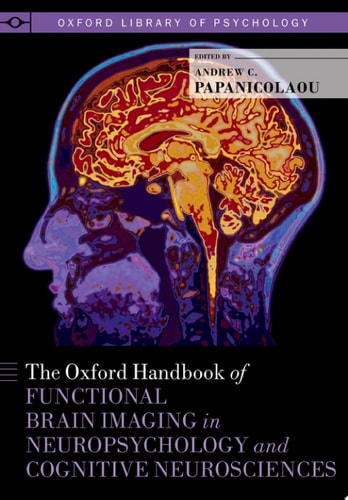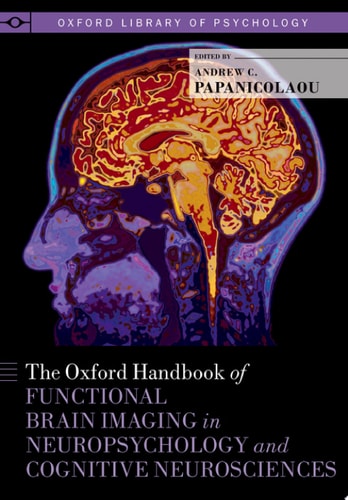
The Oxford Handbook of Functional Brain Imaging in Neuropsychology and Cognitive Neurosciences
0
0
As an Amazon Associate and affiliate partner, Menrva Books earns from qualifying purchases. Learn more
Author Description
The Oxford Handbook of Functional Brain Imaging in Neuropsychology and Cognitive Neurosciences describes in a readily accessible manner the several functional neuroimaging methods and critically appraises their applications that today account for a large part of the contemporary cognitive neuroscience and neuropsychology literature. The complexity and the novelty of these methods often cloud appreciation of the methods' contributions and future promise.The Handbook begins with an overview of the basic concepts of functional brain imaging common to all methods, and proceeds with a description of each of them, namely magnetoencephalography (MEG), functional magnetic resonance imaging (fMRI), positron emission tomography (PET), diffusion tensor imaging (DTI), and transcranial magnetic stimulation (TMS). Its second part covers the various research applications of functional neuroimaging on issues like the function of the default mode network; the possibility and the utility of imaging of consciousness; the search for mnemonic traces of concepts; human will and decision-making; motor cognition; language; the mechanisms of affective states and pain; the presurgical mapping of the brain; and others. As such, the volume reviews the methods and their contributions to current research and comments on the degree to which they have enhanced our understanding of the relation between neurophysiological activity and sensory, motor, and cognitive functions. Moreover, it carefully considers realistic contributions of functional neuroimaging to future endeavors in cognitive neuroscience, medicine, and neuropsychology.
Menrva's Summary
THE THESIS
This volume investigates the efficacy, limitations, and future potential of functional neuroimaging methods within the fields of neuropsychology and cognitive neuroscience. Andrew C. Papanicolaou, a recognized expert in the field, synthesizes complex technical data to provide a critical appraisal of how these imaging technologies inform our understanding of the relationship between neurophysiological activity and human cognitive functions. The text serves as a structured framework for evaluating both the current state of brain imaging research and its practical applications in clinical and experimental settings.
THE SCOPE MAP
What You Will Find
- Technical overviews of MEG, fMRI, PET, DTI, and TMS methodologies.
- Analysis of research applications including the default mode network, consciousness, decision-making, and motor cognition.
- Discussions on presurgical brain mapping and the mechanisms of affective states.
Scope Limits
- The text does not provide a comprehensive manual for operating specific imaging hardware.
- It does not cover non-functional structural imaging techniques beyond their relevance to functional studies.
THE AUTHORITY PERSPECTIVE
Experts and researchers frequently cite this handbook as a foundational reference for understanding the integration of neuroimaging into cognitive science. Readers often note the academic density of the prose, which is intended for professionals and advanced students in the neurosciences.
Page Count:
412
Publication Date:
2017-01-01
Publisher:
Oxford University Press
ISBN-10:
0190669128
ISBN-13:
9780190669126
Brain imaging
Brain
Neuroscience
Medical
Allied Health