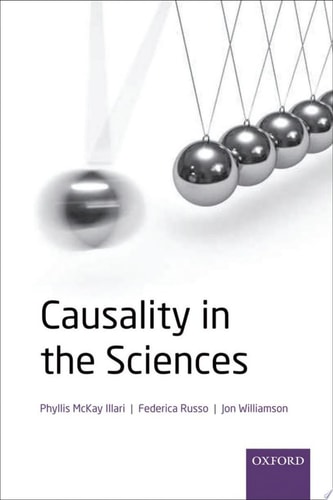
Causality in the Sciences
0
0
As an Amazon Associate and affiliate partner, Menrva Books earns from qualifying purchases. Learn more
Author Description
There is a need for integrated thinking about causality, probability and mechanisms in scientific methodology. Causality and probability are long-established central concepts in the sciences, with a corresponding philosophical literature examining their problems. On the other hand, the philosophical literature examining mechanisms is not long-established, and there is no clear idea of how mechanisms relate to causality and probability. But we need some idea if we are to understand causal inference in the sciences: a panoply of disciplines, ranging from epidemiology to biology, from econometrics to physics, routinely make use of probability, statistics, theory and mechanisms to infer causal relationships.These disciplines have developed very different methods, where causality and probability often seem to have different understandings, and where the mechanisms involved often look very different. This variegated situation raises the question of whether the different sciences are really using different concepts, or whether progress in understanding the tools of causal inference in some sciences can lead to progress in other sciences. The book tackles these questions as well as others concerning the use of causality in the sciences.
Menrva's Summary
THE THESIS
This book investigates whether the disparate methods of causal inference across various scientific disciplines can be unified into a coherent framework of causality, probability, and mechanisms. The authors, Federica Russo, Jon Williamson, and Phyllis McKay Illari, draw upon their expertise in philosophy of science to examine how fields ranging from epidemiology to physics utilize distinct statistical and mechanistic tools. They argue that by analyzing these diverse approaches, researchers can identify commonalities that facilitate cross-disciplinary progress in understanding causal relationships.
THE SCOPE MAP
What You Will Find
- Comparative analysis of causal inference methods in epidemiology, biology, econometrics, and physics.
- Theoretical frameworks integrating probability, statistics, and mechanisms.
- Evaluation of whether scientific disciplines employ fundamentally different concepts of causality.
- Synthesis of philosophical literature regarding the relationship between mechanisms and causal inference.
THE AUTHORITY PERSPECTIVE
Experts recognize this text as a significant contribution to the philosophy of science, particularly for its attempt to bridge the gap between abstract philosophical inquiry and practical scientific methodology. Readers frequently note the academic density of the prose, which is intended for researchers and students familiar with the foundations of causal inference.
Page Count:
816
Publication Date:
2011-05-12
Publisher:
Oxford University Press
ISBN-10:
0199574138
ISBN-13:
9780199574131
Philosophy
Science
Statistics
Epistemology
Methodology
Science
Causation
Community Tags
Similar Books