
Gene Targeting: A Practical Approach
0
0
As an Amazon Associate and affiliate partner, Menrva Books earns from qualifying purchases. Learn more
Author Description
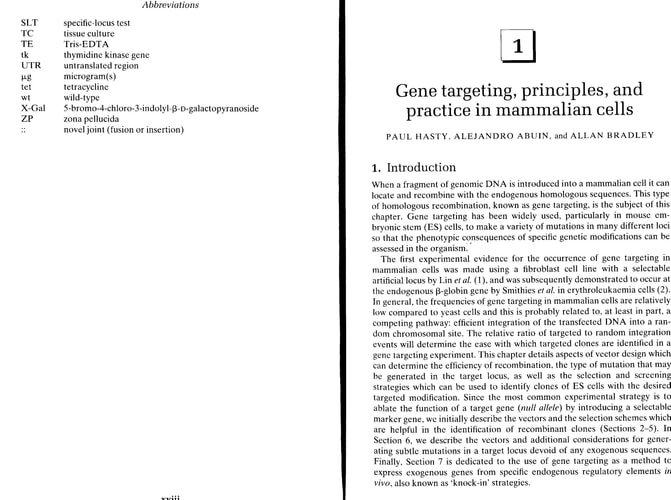
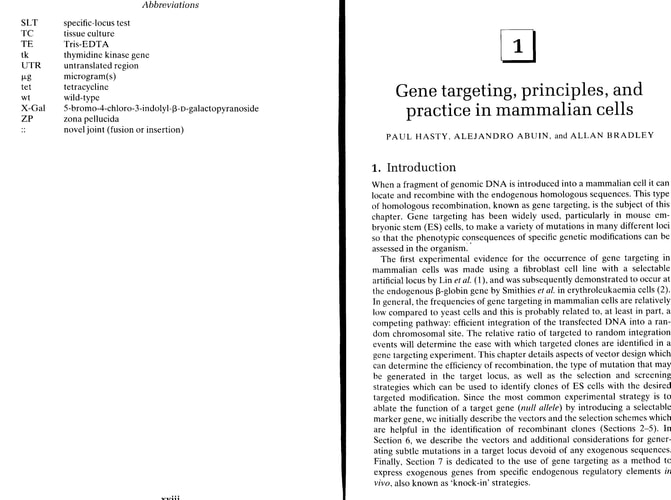
The book begins by describing in detail the rationale behind designing gene targeting vectors, including both basic replacement vectors for creating null mutations and more sophisticated two-step approaches for creating subtle mutations. It describes the latest techniques for culturing and manipulating ES cells and a number of approaches for identifying rare targeted cell clones. Techniques for culturing and assaying for mouse and human hematopoietic progenitors in vitro and in vivo are then covered, followed by the design of, and use of, retrovirus vectors for introducing and expressing genes in bone marrow cells. Two approaches for making ES cell chimeras are described. One chapter covers the more standard approach of ES cell injection into blastocysts as well as morula injection. Another chapter describes techniques for making aggregation chimeras and in particular a recent approach using tetraploid host embryos to produce completely ES cell-derived embryos and mice. The critical steps for obtaining germline chimeras are discussed. The book is concluded by a discussion of the many uses of enhancer, gene and promoter trap vectors, the advantages of each, and describes in detail the techniques for producing and analyzing "trap" vector insertions in ES cells. The protocols are written with sufficient detail for a novice in the area to use them as a manual to learn the various techniques required for producing mutant mice, beginning with the embryonic stem cells and ending up with chimeric mice for breeding.
Menrva's Summary
THE THESIS
This volume investigates the technical methodologies required for successful gene targeting in embryonic stem cells and the subsequent generation of mutant mice. Alexandra L. Joyner provides a comprehensive manual that bridges the gap between theoretical vector design and practical laboratory application. The text synthesizes established protocols and emerging techniques to assist researchers in navigating the complex process of genetic manipulation.
THE SCOPE MAP
What You Will Find
- Detailed protocols for designing replacement and two-step gene targeting vectors.
- Step-by-step instructions for culturing and manipulating embryonic stem cells.
- Methodologies for creating and analyzing mouse and human hematopoietic progenitors.
- Comparative analysis of blastocyst injection, morula injection, and aggregation chimera techniques.
- Advanced applications of enhancer, gene, and promoter trap vectors.
THE AUTHORITY PERSPECTIVE
Experts recognize this work as a foundational laboratory manual for researchers entering the field of mouse genetics. Readers frequently note the high level of procedural detail, which allows novices to execute complex genetic experiments with precision.
Page Count:
260
Publication Date:
1993-10-07
Publisher:
Oxford University Press
ISBN-10:
0199634068
ISBN-13:
9780199634064
Science
Biology
Laboratory Manual
Biotechnology
Genetics
Community Tags
Other Editions(4)

Similar Books















Reader Comments
Share Your Thoughts
No comments yet. Be the first to share your thoughts!