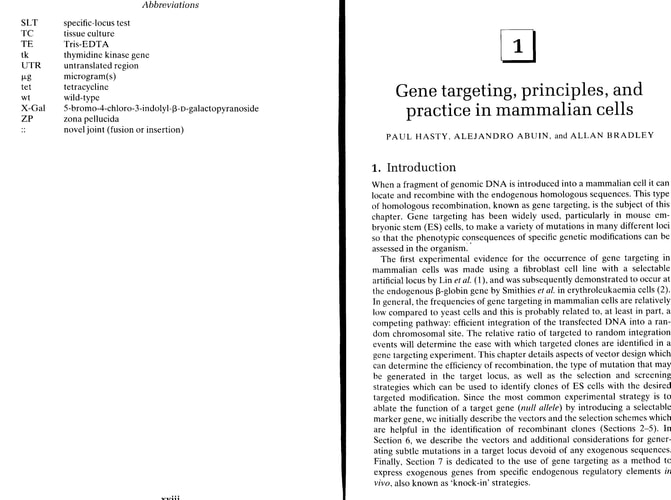
Gene Targeting: A Practical Approach
0
0
As an Amazon Associate and affiliate partner, Menrva Books earns from qualifying purchases. Learn more
Author Description
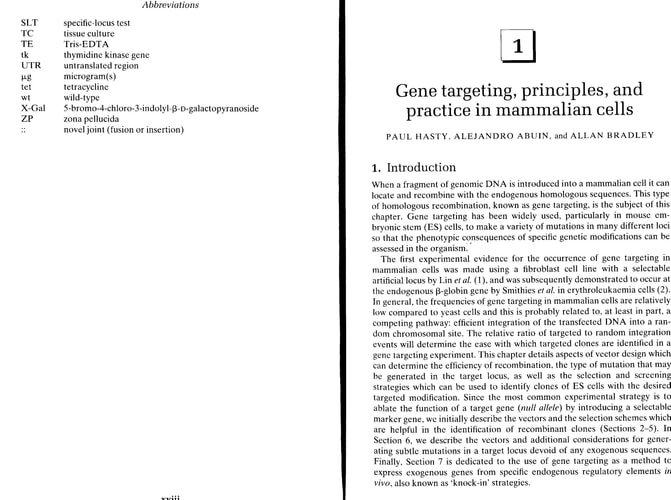
Since the publication of the first edition ofGene Targeting: A Practical Approach in 1993 there have been many advances in gene targeting and this new edition has been thoroughly updated and rewritten to include all the major new techniques. It provides not only tried-and-tested practicalprotocols but detailed guidance on their use and applications. As with the previous editionGene Targeting: A Practical Approach 2e concentrates on gene targeting in mouse ES cells, but the techniques described can be easily adapted to applications in tissue culture including those for human cells.The first chapter covers the design of gene targeting vectors for mammalian cells and describes how to distinguish random integrations from homologous recombination. It is followed by a chapter on extending conventional gene targeting manipulations by using site-specific recombination using theCre-loxP and Flp-FRT systems to produce 'clean' germline mutations and conditionally (in)activating genes. Chapter 3 describes methods for introducing DNA into ES cells for homologous recombination, selection and screening procedures for identifying and recovering targeted cell clones, and a simplemethod for establishing new ES cell lines. Chapter 4 discusses the pros and cons or aggregation versus blastocyst injection to create chimeras, focusing on the technical aspects of generating aggregation chimeras and then describes some of the uses of chimeras. The next topic covered is gene trapstrategies; the structure, components, design, and modification of GT vectors, the various types of GT screens, and the molecular analysis of GT integrations. The final chapter explains the use of classical genetics in gene targeting and phenotype interpretation to create mutations and elucidategene functions.Gene Targeting: A Practical Approach 2e will therefore be of great value to all researchers studying gene function.
Menrva's Summary
THE THESIS
This volume investigates the technical methodologies required to perform effective gene targeting in mammalian cells, specifically focusing on mouse embryonic stem cells. Alexandra L. Joyner, a recognized authority in developmental biology and genetics, compiles updated protocols and theoretical frameworks to assist researchers in navigating the complexities of homologous recombination. The text provides a comprehensive guide for both novice and experienced laboratory scientists, emphasizing the transition from basic vector design to the interpretation of complex phenotypic data.
THE SCOPE MAP
What You Will Find
- Detailed protocols for the design and implementation of gene targeting vectors in mammalian systems.
- Methodologies for site-specific recombination, including the Cre-loxP and Flp-FRT systems.
- Technical procedures for DNA introduction, cell selection, and the establishment of new embryonic stem cell lines.
- Comparative analysis of aggregation versus blastocyst injection techniques for chimera generation.
THE AUTHORITY PERSPECTIVE
Experts and researchers frequently cite this work as a foundational laboratory manual for those working in molecular genetics and developmental biology. The text is noted for its technical density and its practical utility in standardizing complex genetic manipulation procedures within the laboratory setting.
Page Count:
312
Publication Date:
2000-01-01
Publisher:
Oxford University Press
ISBN-10:
0199637938
ISBN-13:
9780199637935
Science
Laboratory manuals
Biology
Genetics
Reference
Community Tags
Other Editions(4)


Similar Books














Reader Comments
Share Your Thoughts
No comments yet. Be the first to share your thoughts!