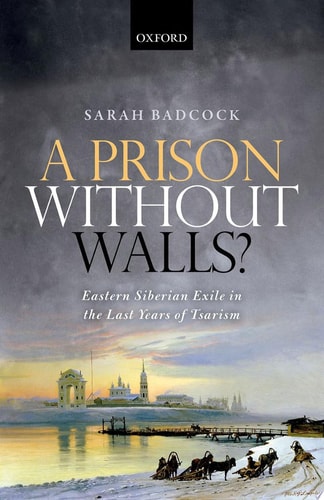
A Prison Without Walls?: Eastern Siberian Exile in the Last Years of Tsarism
0
0
As an Amazon Associate and affiliate partner, Menrva Books earns from qualifying purchases. Learn more
Author Description
A Prison Without Walls? presents a snapshot of daily life for exiles and their dependents in eastern Siberia during the very last years of the Tsarist regime, from the 1905 revolution to the collapse of the Tsarist regime in 1917. This was an extraordinary period in Siberia's history as a place of punishment. There was an unprecedented rise of Siberia's penal use in this fifteen-year window, and a dramatic increase in the number of exiles punished for political offences. This work focuses on the region of Eastern Siberia, taking the regions of Irkutsk and Yakutsk in north-eastern Siberia as its focal points. Siberian exile was the antithesis of Foucault's modern prison. The State did not observe, monitor, and control its exiles closely; often not even knowing where the exiles were. Exiles were free to govern their daily lives; free of fences and free from close observation and supervision, but despite these freedoms, Siberian exile represented one of Russia's most feared punishments.In this volume, Sarah Badcock seeks to humanise the individuals who made up the mass of exiles, and the men, women, and children who followed them voluntarily into exile. A Prison Without Walls? is structured in a broad narrative arc that moves from travel to exile, life and communities in exile, work and escape, and finally illness in exile. The book gives a personal, human, empathetic insight into what exilic experience entailed, and allows us to comprehend why eastern Siberia was regarded as a terrible punishment, despite its apparent freedoms.
Menrva's Summary
THE THESIS
This book investigates the paradox of the Siberian exile system, questioning how a penal environment characterized by a lack of physical containment and state supervision functioned as a severe and feared form of punishment. Sarah Badcock, a historian specializing in late Imperial Russia, utilizes archival records and personal accounts to reconstruct the lived experience of political exiles between 1905 and 1917. She argues that the psychological and environmental hardships of the region, rather than direct state surveillance, constituted the core of the punitive experience. The work challenges traditional Foucauldian models of the modern prison by highlighting the state's inability to effectively monitor its displaced population.
THE SCOPE MAP
What You Will Find
- Analysis of the penal system in the Irkutsk and Yakutsk regions of Eastern Siberia.
- Examination of the demographic shift toward political exiles during the final years of the Tsarist regime.
- Qualitative evidence derived from personal letters, diaries, and administrative records of exiles and their families.
- Thematic exploration of the daily realities of exile, including travel, community formation, labor, and the prevalence of illness.
THE AUTHORITY PERSPECTIVE
Historians and scholars of Russian penal history recognize this work as a significant contribution to the study of the late Imperial period. Readers frequently note the balance between administrative analysis and the human-centered narrative that brings the individual experience of exile to the forefront of the discussion.
Page Count:
256
Publication Date:
2016-12-06
Publisher:
Oxford University Press
ISBN-10:
0199641552
ISBN-13:
9780199641550
History
history russia
Convict Labor
Penal Colonies
Political History
Exiles
Social History
Russian History
Community Tags
Similar Books