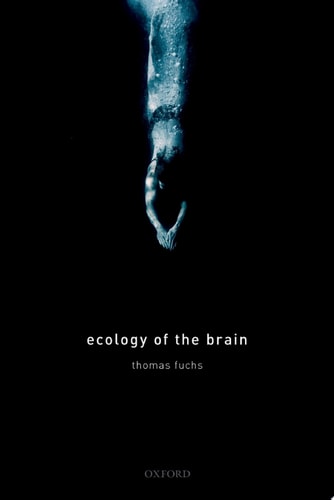
Ecology of the Brain: The Phenomenology and Biology of the Embodied Mind
0
0
As an Amazon Associate and affiliate partner, Menrva Books earns from qualifying purchases. Learn more
Author Description
Present day neuroscience places the brain at the centre of study. But what if researchers viewed the brain not as the foundation of life, rather as a mediating organ?Ecology of the Brain addresses this very question. It considers the human body as a collective, a living being which uses the brain to mediate interactions. Those interactions may be both within the human body and between the human body and its environment.Within this framework, the mind is seen not as a product of the brain but as an activity of the living being; an activity which integrates the brain within the everyday functions of the human body. Going further, Fuchs reformulates the traditional mind-brain problem, presenting it as a dual aspect of the living being: the lived body and the subjective body - the living body and the objective body. The processes of living and experiencing life, Fuchs argues, are in fact inextricably linked; it is not the brain, but the human being who feels, thinks and acts.For students and academics, Ecology of the Brain will be of interest to those studying or researching theory of mind, social and cultural interaction, psychiatry, and psychotherapy.
Menrva's Summary
THE THESIS
Can the human mind be accurately understood if we shift our focus from the brain as a central processor to the brain as a mediating organ within an embodied system? Thomas Fuchs, a professor of philosophy and psychiatry, challenges the prevailing neurocentric paradigm by arguing that the mind is an activity of the entire living being rather than a localized product of neural circuitry. He utilizes a phenomenological and biological framework to propose that human experience arises from the continuous interaction between the body and its environment, effectively reformulating the traditional mind-brain problem into a dual-aspect theory of the lived and objective body.
THE SCOPE MAP
What You Will Find
- A comprehensive critique of neurocentrism in contemporary cognitive science.
- A theoretical framework for the embodied and enactive mind.
- Analysis of the dual-aspect relationship between the subjective lived body and the objective physical body.
- Applications of embodied cognition to clinical psychiatry and psychotherapy.
THE AUTHORITY PERSPECTIVE
Experts and academics in the fields of philosophy of mind and psychiatry recognize this work as a significant contribution to the enactive approach to cognition. Readers frequently note the academic density of the prose, which requires a strong background in both philosophical phenomenology and biological theory to fully grasp the author's arguments.
Page Count:
336
Publication Date:
2018-02-14
Publisher:
Oxford University Press
ISBN-10:
0199646880
ISBN-13:
9780199646883
Philosophy
Psychology
Psychiatry
Brain
Neuroscience
Biology