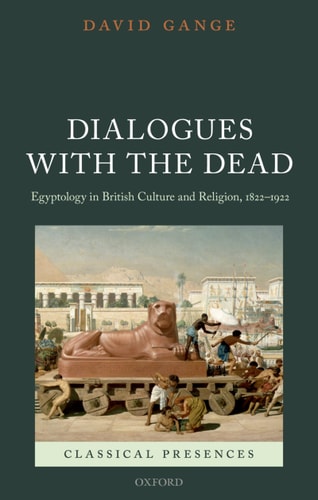
Dialogues with the Dead: Egyptology in British Culture and Religion, 1822-1922
0
0
As an Amazon Associate and affiliate partner, Menrva Books earns from qualifying purchases. Learn more
Author Description
Almost every great figure in nineteenth-century Britain, from Thomas Carlyle to William Gladstone to Charles Darwin, read histories of ancient Egypt and argued about their content. Egypt became a focal point in disputes over the nature of human origins, the patterns underlying human history, the status and purpose of the Bible, and the cultural role of the classics. Egyptian archaeology ingrained its influence everywhere from the lecture halls of the ancient universities to the devotional aids of rural Sunday schools, and the plots of sensation fiction.Dialogues with the Dead shows, for the first time, how Egyptology's development over the century that followed the decipherment of the hieroglyphic script in 1822 can be understood only through its intimate entanglement with the historical, scientific, and religious contentions which defined the era.
Menrva's Summary
THE THESIS
This book investigates how the emergence of Egyptology in Britain between 1822 and 1922 fundamentally shaped and was shaped by the era's most pressing scientific, religious, and historical debates. David Gange, a historian specializing in nineteenth-century cultural and intellectual history, utilizes a wide array of primary sources—ranging from academic lectures to popular fiction and devotional texts—to demonstrate that Egyptology was not a peripheral interest but a central pillar of Victorian and Edwardian intellectual life. He argues that the decipherment of hieroglyphs provided a new lens through which British thinkers re-evaluated human origins, the authority of the Bible, and the trajectory of civilization itself.
THE SCOPE MAP
What You Will Find
- A comprehensive analysis of the century following the 1822 decipherment of the Rosetta Stone.
- Examination of how Egyptian archaeology influenced diverse sectors including university curricula, Sunday school materials, and popular literature.
- Integration of intellectual history with the study of scientific and religious contention in Britain.
- Case studies of prominent figures such as Thomas Carlyle, William Gladstone, and Charles Darwin and their engagement with Egyptian history.
THE AUTHORITY PERSPECTIVE
Scholars and historians recognize this work as a significant contribution to the study of nineteenth-century intellectual culture and the reception of antiquity. Readers frequently note the academic rigor of the prose and the depth of the archival research presented throughout the text.
Page Count:
368
Publication Date:
2013-08-16
Publisher:
Oxford University Press
ISBN-10:
0199653100
ISBN-13:
9780199653102
Religion
History
Great Britain
Archaeology
Egyptology
British History
Cultural History
Community Tags
Other Editions(2)

Similar Books