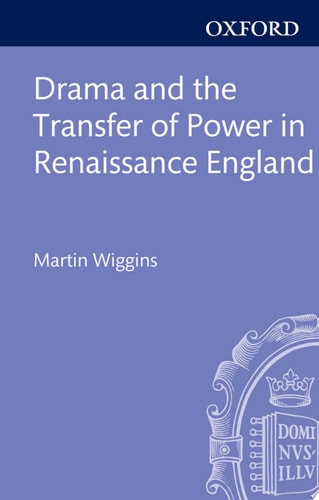
Drama and the Transfer of Power in Renaissance England
0
0
As an Amazon Associate and affiliate partner, Menrva Books earns from qualifying purchases. Learn more
Author Description
The state is at its most volatile when supreme power changes hands. This book studies five such moments of transfer in the sixteenth and early seventeenth centuries, from Henry VIII to the English Revolution, pazying particular attention to the political function and agency of drama in smoothing the transition. Masques and civic pageants served as an art form by which incoming authority could declare its power, and subjects could express their willing subordination to the new regime. The book contains vivid case studies of these dramatic works, some of which have never before been identified, and the circumstances for which they were written: the use of London street theatre in 1535 to promote Henry VIII's arrogation of Royal Supremacy; the aggressively Protestant court masque of 1559 which marked the accession of Elizabeth I, and the censorship which resulted when the same mode of dramatic discourse spread to more plebeian stages; the masques and entertainments of James I's initial year on the English throne, through which the new Stuart dynasty asserted its legitimacy and individual courtiers made their bids for influence; and the formal coronation entry to London, furnished with dramatic pageants, which London paid for but Charles I refused to undertake. The final chapter describes how, in 1642, a very different incoming regime planned to ignore drama altogether, until some surprisingly contingent circumstances forced its hand.
Menrva's Summary
THE THESIS
This book investigates how drama functioned as a critical political instrument for legitimizing and managing the transfer of supreme power in England between the sixteenth and seventeenth centuries. Martin Wiggins, a scholar of early modern literature, examines the intersection of performance and statecraft during five volatile successions. By analyzing primary source documents and specific dramatic performances, the author argues that masques, pageants, and street theater were not merely decorative but served as essential tools for incoming regimes to assert authority and for subjects to negotiate their subordination.
THE SCOPE MAP
What You Will Find
- Analysis of political transitions from the reign of Henry VIII through the English Revolution in 1642.
- Examination of specific dramatic forms including court masques, civic pageants, and London street theater.
- Case studies of performances surrounding the accessions of Elizabeth I, James I, and Charles I.
- Discussion of the role of censorship and the strategic use of performance to promote royal supremacy.
THE AUTHORITY PERSPECTIVE
Scholars and historians recognize this work as a significant contribution to the study of early modern political culture and performance theory. Readers frequently note the meticulous archival research and the clarity with which the author connects theatrical artifice to the practical realities of monarchical power transitions.
Page Count:
176
Publication Date:
2012-09-29
Publisher:
Oxford University Press
ISBN-10:
0199650594
ISBN-13:
9780199650590
History
Drama
Renaissance
British History
Theater History