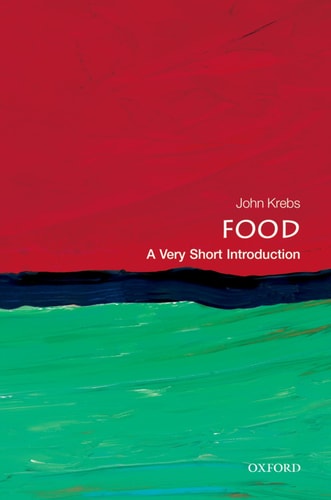
Food: A Very Short Introduction
0
0
As an Amazon Associate and affiliate partner, Menrva Books earns from qualifying purchases. Learn more
Author Description
In this Very Short Introduction, Prof Lord John Krebs provides a brief history of human food, from our remote ancestors 3 million years ago to the present day. By looking at the four great transitions in human food - cooking, agriculture, processing, and preservation - he considers a variety of questions, including why people like some kinds of foods and not others; how your senses contribute to flavor; the role of genetics in our likes and dislikes; and the differences in learning and culture around the world.In turn he considers aspects of diet, nutrition, and health, and the disparity between malnutrition in some places and overconsumption in others. Finally, he considers some of the big issues - the obesity crisis, sustainable agriculture, the role of new technologies such as genetic modification of crops, and ends by posing the question: how will it be possible to feed a population of 9 billion in 2050, without destroying our natural environment?About the Series:Oxford's Very Short Introductions series offers concise and original introductions to a wide range of subjects--from Islam to Sociology, Politics to Classics, Literary Theory to History, and Archaeology to the Bible. Not simply a textbook of definitions, each volume in this series provides trenchant and provocative--yet always balanced and complete--discussions of the central issues in a given discipline or field. Every Very Short Introduction gives a readable evolution of the subject in question, demonstrating how the subject has developed and how it has influenced society. Eventually, the series will encompass every major academic discipline, offering all students an accessible and abundant reference library. Whatever the area of study that one deems important or appealing, whatever the topic that fascinates the general reader, the Very Short Introductions series has a handy and affordable guide that will likely prove indispensable.
Menrva's Summary
THE THESIS
This book investigates the complex evolution of human food systems and the critical challenges of feeding a growing global population while maintaining environmental sustainability. Prof Lord John Krebs, a distinguished scientist, utilizes historical data and biological research to frame the four major transitions in human diet: cooking, agriculture, processing, and preservation. He examines the intersection of genetics, culture, and sensory perception to explain human dietary preferences and the global disparities in nutrition.
THE SCOPE MAP
What You Will Find
- An analysis of the four historical transitions in human food consumption and production.
- Scientific explanations of how genetics and sensory input influence flavor perception and food choices.
- A comparative study of global nutrition, contrasting malnutrition with the modern obesity crisis.
- A critical evaluation of sustainable agriculture and the role of genetic modification in future food security.
THE AUTHORITY PERSPECTIVE
Experts and readers recognize this volume as a concise, high-level overview suitable for those seeking a foundational understanding of food science and history. The prose is noted for its academic clarity and ability to synthesize complex global issues into a manageable format.
Page Count:
144
Publication Date:
2013-01-01
Publisher:
Oxford University Press
ISBN-10:
0199661081
ISBN-13:
9780199661084
History
Science
Earth Sciences
Sociology
Nutrition
Agriculture
Food
Community Tags
Other Editions(2)
Similar Books



Reader Comments
Share Your Thoughts
No comments yet. Be the first to share your thoughts!