Zoopolis: A Political Theory of Animal Rights
0
0
As an Amazon Associate and affiliate partner, Menrva Books earns from qualifying purchases. Learn more
Author Description
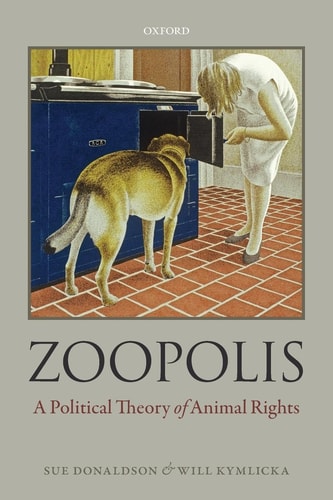
Zoopolis offers a new agenda for the theory and practice of animal rights. Most animal rights theory focuses on the intrinsic capacities or interests of animals, and the moral status and moral rights that these intrinsic characteristics give rise to. Zoopolis shifts the debate from the realm of moral theory and applied ethics to the realm of political theory, focusing on the relational obligations that arise from the varied ways that animals relate to human societies and institutions. Building on recent developments in the political theory of group-differentiated citizenship, Zoopolis introduces us to the genuine "political animal". It argues that different types of animals stand in different relationships to human political communities. Domesticated animals should be seen as full members of human-animal mixed communities, participating in the cooperative project of shared citizenship. Wilderness animals, by contrast, form their own sovereign communities entitled to protection against colonization, invasion, domination and other threats to self-determination. "Liminal" animals who are wild but live in the midst of human settlement (such as crows or raccoons) should be seen as "denizens", resident of our societies, but not fully included in rights and responsibilities of citizenship. To all of these animals we owe respect for their basic inviolable rights. But we inevitably and appropriately have very different relations with them, with different types of obligations. Humans and animals are inextricably bound in a complex web of relationships, and Zoopolis offers an original and profoundly affirmative vision of how to ground this complex web of relations on principles of justice and compassion.
Menrva's Summary
THE THESIS
This book investigates how political theory can provide a more robust framework for animal rights by shifting the focus from individual moral status to the relational obligations inherent in human-animal interactions. The authors, Sue Donaldson and Will Kymlicka, utilize their expertise in political philosophy to challenge traditional animal rights discourse. They argue that by applying concepts of citizenship and sovereignty, society can better define the specific duties humans owe to different categories of animals based on their proximity and relationship to human institutions.
THE SCOPE MAP
What You Will Find
- A tripartite classification system for animals: domesticated, wild, and liminal.
- Application of group-differentiated citizenship theory to non-human species.
- Analysis of sovereignty and self-determination rights for wilderness populations.
- A framework for defining 'denizenship' for animals living within human settlements.
THE AUTHORITY PERSPECTIVE
Experts in political philosophy and animal ethics recognize this work as a significant shift in the field, moving beyond standard utilitarian or rights-based arguments. Readers frequently note the academic density of the prose, which is intended for scholars and students of political theory rather than a general audience.
Page Count:
352
Publication Date:
2013-07-18
Publisher:
Oxford University Press
ISBN-10:
0199673012
ISBN-13:
9780199673018
Philosophy
Sociology
Human Relationships
Ethics
Animal Rights
Political Theory
Community Tags
Similar Books