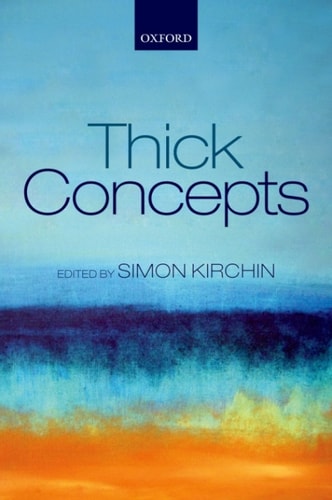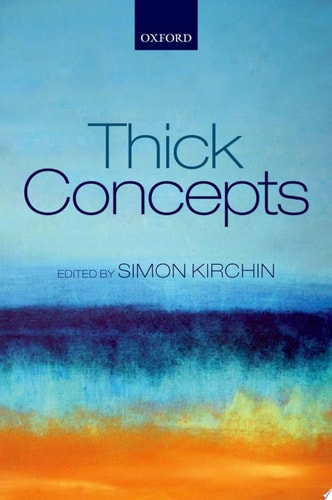
Thick Concepts
0
0
As an Amazon Associate and affiliate partner, Menrva Books earns from qualifying purchases. Learn more
Author Description
What is the difference between judging someone to be good and judging them to be kind? Both judgements are typically positive, but the latter seems to offer more description of the person: we get a more specific sense of what they are like. Very general evaluative concepts (such as good, bad, right and wrong) are referred to as thin concepts, whilst more specific ones (including brave, rude, gracious, wicked, sympathetic, and mean) are termed thick concepts. In this volume, an international team of experts addresses the questions that this distinction opens up. How do the descriptive and evaluative functions or elements of thick concepts combine with each other? Are these functions or elements separable in the first place? Is there a sharp division between thin and thick concepts? Can we mark interesting further distinctions between how thick ethical concepts work and how other thick concepts work, such as those found in aesthetics and epistemology? How, if at all, are thick concepts related to reasons and action? These questions, and others, touch on some of the deepest philosophical issues about the evaluative and normative. They force us to think hard about the place of the evaluative in a (seemingly) nonevaluative world, and raise fascinating issues about how language works.
Menrva's Summary
THE THESIS
This volume investigates the philosophical distinction between 'thin' evaluative concepts, such as good or bad, and 'thick' concepts, such as kind or brave, to determine how they function within ethical and normative frameworks. Editor Simon Kirchin assembles a collection of essays from international experts to analyze the descriptive and evaluative elements inherent in these concepts. The contributors examine whether these elements can be separated, how they relate to human action and reasons, and how they operate across different domains including aesthetics and epistemology.
THE SCOPE MAP
What You Will Find
- Analysis of the interplay between descriptive and evaluative functions in language.
- Comparative studies of thick concepts in ethics, aesthetics, and epistemology.
- Theoretical frameworks regarding the relationship between evaluative concepts and human action.
- Critical examination of the division between thin and thick evaluative terminology.
THE AUTHORITY PERSPECTIVE
Experts identify this collection as a significant resource for those engaged in meta-ethical debates regarding the nature of value judgments. Readers frequently note the academic density of the prose, which is intended for advanced students and professional philosophers interested in the mechanics of normative language.
Page Count:
256
Publication Date:
2013-06-10
Publisher:
Oxford University Press
ISBN-10:
0199672342
ISBN-13:
9780199672349
Philosophy
Aesthetics
Epistemology
Ethics
Language
Knowledge Theory
Academic