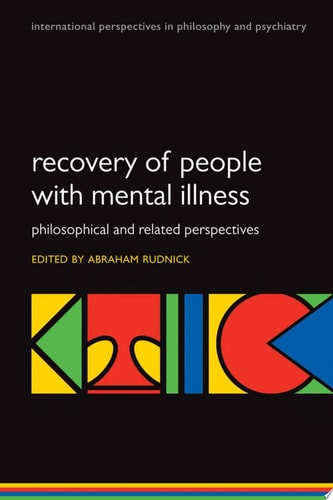
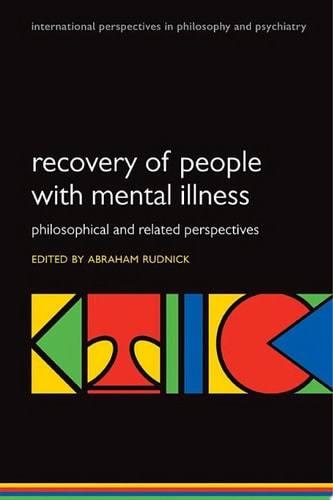
Recovery of People with Mental Illness: Philosophical and Related Perspectives
0
0
As an Amazon Associate and affiliate partner, Menrva Books earns from qualifying purchases. Learn more
Author Description
It is only in the past 20 years that the concept of 'recovery' from mental health has been more widely considered and researched. Before then, it was generally considered that 'stability' was the best that anyone suffering from a mental disorder could hope for. But now it is recognised that, throughout their mental illness, many patients develop new beliefs, feelings, values, attitudes, and ways of dealing with their disorder. The notion of recovery from mental illness is thus rapidly being accepted and is inserting more hope into mainstream psychiatry and other parts of the mental health care system around the world. Yet, in spite of conceptual and other challenges that this notion raises, including a variety of interpretations, there is scarcely any systematic philosophical discussion of it.This book is unique in addressing philosophical issues - including conceptual challenges and opportunities - raised by the notion of recovery of people with mental illness. Such recovery - particularly in relation to serious mental illness such as schizophrenia - is often not about cure and can mean different things to different people. For example, it can mean symptom alleviation, ability to work, or the striving toward mental well-being (with or without symptoms). The book addresses these different meanings and their philosophical grounds, bringing to the fore perspectives of people with mental illness and their families as well as perspectives of philosophers, mental health care providers and researchers, among others.The important new work will contribute to further research, reflective practice and policy making in relation to the recovery of people with mental illness.It is essential reading for philosophers of health, psychiatrists, and other mental care providers, as well as policy makers.
Menrva's Summary
THE THESIS
This book investigates the conceptual and philosophical foundations of 'recovery' within the context of mental illness, challenging traditional clinical definitions of stability. Abraham Rudnick, a scholar in the field of philosophy and psychiatry, synthesizes diverse viewpoints to examine how recovery is defined, experienced, and implemented in modern mental health care. By moving beyond a purely medical model of 'cure,' the text explores the subjective and objective dimensions of well-being for individuals living with serious mental disorders. The work provides a rigorous framework for understanding the shifting paradigms in psychiatric practice and policy.
THE SCOPE MAP
What You Will Find
- Philosophical analysis of recovery definitions including symptom alleviation and functional capacity
- Integration of perspectives from patients, families, clinicians, and academic philosophers
- Examination of the shift from stability-focused care to recovery-oriented mental health systems
- Discussion of conceptual challenges regarding schizophrenia and chronic mental health conditions
THE AUTHORITY PERSPECTIVE
Experts identify this work as a significant contribution to the intersection of philosophy and clinical psychiatry, filling a gap in the systematic literature on recovery. Readers frequently note the academic density of the prose, which serves as a foundational text for practitioners and policy makers seeking to refine their approach to mental health care.
Page Count:
344
Publication Date:
2012-10-25
Publisher:
Oxford University Press
ISBN-10:
0199691312
ISBN-13:
9780199691319
Philosophy
Psychology
Psychiatry
Mental Health
Medical Ethics
Community Tags
Other Editions(2)
Similar Books







Reader Comments
Share Your Thoughts
No comments yet. Be the first to share your thoughts!