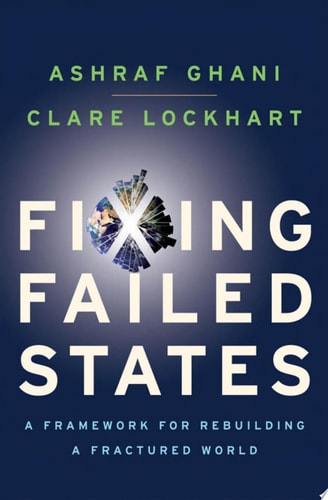
Fixing Failed States
0
0
As an Amazon Associate and affiliate partner, Menrva Books earns from qualifying purchases. Learn more
Author Description
Today Between Forty And Sixty Nations, Home To More Than One Billion People, Have Either Collapsed Or Are Teetering On The Brink Of Failure. The World's Worst Problems--terrorism, Drugs And Human Trafficking, Absolute Poverty, Ethnic Conflict, Disease, Genocide--originate In Such States, And The International Community Has Devoted Billions Of Dollars To Solving The Problem. Yet By And Large The Effort Has Not Succeeded. Ashraf Ghani And Clare Lockhart Have Taken An Active Part In The Effort To Save Failed States For Many Years, Serving As World Bank Officials, As Advisers To The Un, And As High-level Participants In The New Government Of Afghanistan. In Fixing Failed States, They Describe The Issue--vividly And Convincingly--offering An On-the-ground Picture Of Why Past Efforts Have Not Worked And Advancing A Groundbreaking New Solution To This Most Pressing Of Global Crises. For The Paperback Edition, They Have Added A New Preface That Addresses The Continuing Crisis In Light Of Ongoing Governance Problems In Weak States Like Afghanistan And The Global Financial Recession. As They Explain, Many Of These Countries Already Have The Resources They Need, If Only We Knew How To Connect Them To Global Knowledge And Put Them To Work In The Right Way. Their State-building Strategy, Which Assigns Responsibility Equally Among The International Community, National Leaders, And Citizens, Maps Out A Clear Path To Political And Economic Stability. The Authors Provide A Practical Framework For Achieving These Ends, Supporting Their Case With First-hand Examples Of Struggling Territories Such As Afghanistan, Sudan, Kosovo And Nepal As Well As The World's Success Stories--singapore, Ireland, And Even The American South.
Menrva's Summary
THE THESIS
This work investigates why international interventions in failed states consistently falter and proposes a new framework for sustainable state-building. Ashraf Ghani, a former World Bank official and President of Afghanistan, and Clare Lockhart, a legal and development expert, draw upon their extensive experience in conflict zones and international policy to critique current aid models. They argue that the primary failure lies in the disconnect between global resources and local governance, proposing a strategy that balances the responsibilities of international actors, national leaders, and local citizens to foster long-term stability.
THE SCOPE MAP
What You Will Find
- A comprehensive analysis of the structural causes of state failure, including poverty, ethnic conflict, and institutional collapse.
- A proposed state-building framework that emphasizes the integration of local resources with global knowledge networks.
- Case studies of struggling territories such as Afghanistan, Sudan, Kosovo, and Nepal.
- Comparative analysis of successful development models, including Singapore, Ireland, and the American South.
THE AUTHORITY PERSPECTIVE
Experts and policymakers frequently cite this text as a foundational resource for understanding the complexities of post-conflict reconstruction and governance. Readers often note the pragmatic, hands-on approach the authors take, which contrasts with more theoretical academic literature on the subject.
Page Count:
272
Publication Date:
2008-01-01
Publisher:
Oxford University Press
ISBN-10:
0199711569
ISBN-13:
9780199711567
Economics
History
Public Policy
Governance
International relations
Community Tags
Similar Books