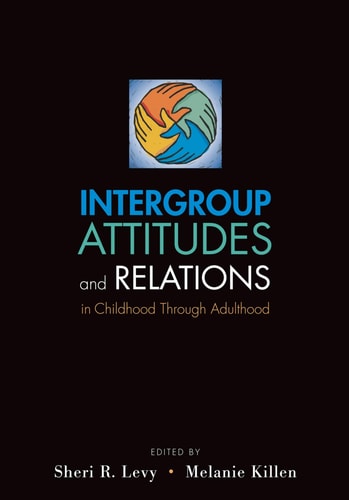
Intergroup Attitudes and Relations in Childhood Through Adulthood
0
0
As an Amazon Associate and affiliate partner, Menrva Books earns from qualifying purchases. Learn more
Author Description
This edited volume captures an exciting new trend in research on intergroup attitudes and relations, which concerns how individuals make judgments, and interact with individuals from different group categories, broadly defined in terms of gender, race, age, culture, religion, sexual orientation, and body type. This new approach is an integrative perspective, one which draws on theory and research in the areas of developmental and social psychology.Throughout human history, intergroup conflict has often served as the basis for societal conflict, strife, and tension. Over the past several decades, individual and group mobility has enabled individuals to interact with a wider range of people from different backgrounds than ever before. On the one hand, this level of societal heterogeneity contributes to intergroup conflict. On the other hand, the experience of such heterogeneity has also reduced stereotypes, and increased an understanding of others' perspectives and experiences. Where does it begin? When do children acquire stereotypes about the other? What are the sources of influence, and how does change come about?To provide a deeper understanding of the origins, stability, and reduction of intergroup conflict, scholars in this volume report on current, cutting edge theory and new research findings. Progress in the area of intergroup attitudes relies on continued advances in both the understanding of the origins and the trajectory of intergroup conflict and harmony (as historically studied by developmental psychologists) and the understanding of contexts and conditions that contribute to positive and negative intergroup attitudes and relations (as historically studied by social psychologists). Recent social and developmental psychology research clarifies the multifaceted nature of prejudice and the need for an interdisciplinary approach to addressing prejudice. The recent blossoming of research on the integration of developmental and social psychology represented in
Menrva's Summary
THE THESIS
This volume investigates the developmental origins and social mechanisms that govern how individuals form, maintain, or alter their attitudes toward diverse group categories across the lifespan. Editors Melanie Killen and Sheri R. Levy synthesize current research from developmental and social psychology to examine how societal heterogeneity influences intergroup conflict and harmony. By integrating these two psychological disciplines, the contributors provide a framework for understanding the trajectory of prejudice and the conditions necessary for fostering positive intergroup relations.
THE SCOPE MAP
What You Will Find
- Analysis of prejudice formation regarding gender, race, religion, and sexual orientation.
- Theoretical integration of developmental trajectories and social situational contexts.
- Empirical research findings on the reduction of stereotypes in diverse environments.
- Examination of the sources of influence that shape individual judgments of out-group members.
THE AUTHORITY PERSPECTIVE
Experts identify this volume as a significant contribution to the interdisciplinary study of prejudice, noting its utility for researchers and graduate students in psychology. Readers frequently highlight the text's success in bridging the gap between developmental and social psychological perspectives on intergroup dynamics.
Page Count:
288
Publication Date:
2010-02-15
Publisher:
Oxford University Press
ISBN-10:
0199739730
ISBN-13:
9780199739738
Psychology
Social Groups
Sociology
Education
Prejudices
Developmental Psychology
Community Tags
Other Editions(2)

Similar Books













Reader Comments
Share Your Thoughts
No comments yet. Be the first to share your thoughts!