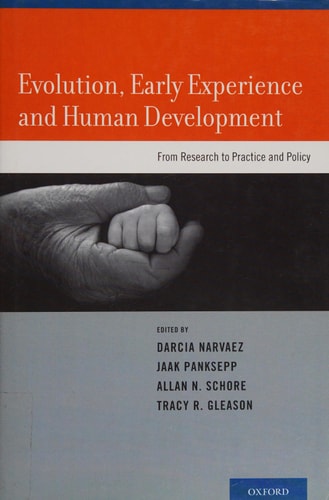
Evolution, Early Experience and Human Development: From Research to Practice and Policy
0
0
As an Amazon Associate and affiliate partner, Menrva Books earns from qualifying purchases. Learn more
Author Description
The field of cognitive psychology has expanded rapidly in recent years, with experts in affective and cognitive neuroscience revealing more about mammalian brain function than ever before. In contrast, psychological problems such as ADHD, autism, anxiety, and depression are on the rise, as are medical conditions such as diabetes, obesity, and autoimmune disorders. Why, in this era of unprecedented scientific self-knowledge, does there seem to be so much uncertainty about what human beings need for optimal development?Evolution, Early Experience and Human Development asserts that human development is being misshaped by government policies, social practices, and public beliefs that fail to consider basic human needs. In this pioneering volume, scientists from a range of disciplines theorize that the increase in conditions such as depression and obesity can be partially attributed to a disparity between the environments and conditions under which our mammalian brains currently develop and our evolutionary heritage. For example, healthy brain and emotional development depends to a significant extent upon caregiver availability and quality of care. These include practices such as breastfeeding, co-sleeping, and parental social support, which have waned in modern society, but nevertheless may be integral to healthy development. As the authors argue, without a more informed appreciation of the ideal conditions under which human brains/minds develop and function, human beings will continue to struggle with suboptimal mental and physical health, and as problems emerge psychological treatments alone will not be effective. The best approach is to recognize these needs at the outset so as to optimize child development. Evolution, Early Experience and Human Development puts forth a logical, empirically based argument regarding human mammalian needs for optimal development, based on research from anthropology, neurobiology, animal science, and human development.
Menrva's Summary
THE THESIS
This volume investigates the widening gap between modern child-rearing practices and the evolutionary requirements of the developing human mammalian brain. The authors, a multidisciplinary team of experts in neuroscience, anthropology, and developmental psychology, argue that contemporary social policies and parenting norms often ignore the biological imperatives necessary for optimal health. By synthesizing data from animal science, neurobiology, and human development, they contend that the rising prevalence of mental and physical health disorders is a direct consequence of this environmental mismatch.
THE SCOPE MAP
What You Will Find
- Analysis of the evolutionary heritage of mammalian brain development.
- Examination of the impact of caregiver availability and early life practices on long-term health.
- Evidence-based discussion on the role of breastfeeding, co-sleeping, and social support systems.
- A framework for aligning public policy and social practices with basic human biological needs.
THE AUTHORITY PERSPECTIVE
Experts recognize this work as a significant synthesis of cross-disciplinary research regarding the biological foundations of human development. Readers frequently note the academic density of the prose, which serves as a foundational text for professionals in psychology, public health, and education.
Page Count:
490
Publication Date:
2012-11-06
Publisher:
Oxford University Press
ISBN-10:
0199755051
ISBN-13:
9780199755059
Psychology
Sociology
Public Policy
Evolutionary Biology
Developmental Psychology
Neuroscience
Community Tags
Similar Books







Reader Comments
Share Your Thoughts
No comments yet. Be the first to share your thoughts!