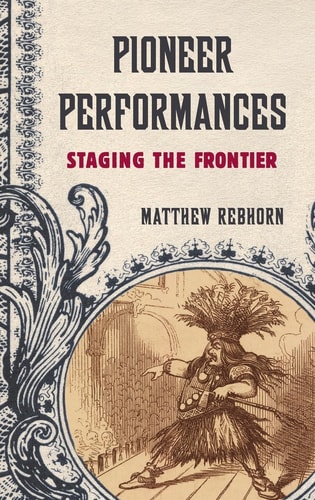
Pioneer Performances: Staging the Frontier
0
0
As an Amazon Associate and affiliate partner, Menrva Books earns from qualifying purchases. Learn more
Author Description
The Wild West was popular with American audiences long before the appearance of the Hollywood western. From 1829 to 1881, playgoers throughout the nation applauded frontier dramas that celebrated conventional American values like rugged individualism and the ideology of Manifest Destiny. Yet, as Pioneer Performances shows, a more subversive cultural agenda often worked within the orthodox framework of this popular drama. Drawing on a range of plays and public entertainments, Matthew Rebhorn uncovers the heterodox themes in the nineteenth-century stage, ultimately revealing the frontier as a set of complex performative practices imbued with a sense of trenchant social critique.The dramatis personae of Rebhorn's study includes Buffalo Bill Cody; Gowongo Mohawk, a cross-dressing Native American performer; T.D. Rice, the blackface minstrel who created the role of Jim Crow; Edwin Forrest, the biggest star of the nineteenth-century stage; and Dion Boucicault, an expatriate Irish playwright who penned a sophisticated critique of race relations in the American South. In addition to this colorful cast of characters, works by lesser-known figures like James Kirke Paulding, Augustin Daly, and Joaquin Miller serve to illustrate the complex interpretations of the frontier on the American stage. With each case, Rebhorn demonstrates the multifaceted, politically charged nature of nineteenth-century drama.Closing with a coda that considers latter-day representations of the frontier, such as in Ang Lee's Brokeback Mountain and the staged photo opportunities on George W. Bush's Texas ranch, Rebhorn reveals the lasting impact of the genre and the performative practices it first introduced on the American stage. Drawn from in-depth research in theater history, this study illustrates how the frontier was-and still is-defined in performance.
Menrva's Summary
THE THESIS
This study investigates how nineteenth-century frontier dramas, while ostensibly celebrating American expansionism, functioned as complex vehicles for subversive social and political critique. Matthew Rebhorn, a scholar of American literature and culture, utilizes a diverse archive of plays, public performances, and historical documents to challenge the notion that these dramas were merely expressions of Manifest Destiny. By examining the performative practices of the era, he argues that the frontier was a contested space where issues of race, identity, and national ideology were actively negotiated on stage.
THE SCOPE MAP
What You Will Find
- Analysis of nineteenth-century American frontier dramas from 1829 to 1881.
- Examination of key figures including Buffalo Bill Cody, Edwin Forrest, and T.D. Rice.
- Exploration of subversive themes regarding race, gender, and social hierarchy within popular entertainment.
- A concluding assessment of how these historical performative practices influence contemporary representations of the frontier.
THE AUTHORITY PERSPECTIVE
Scholars and theater historians recognize this work as a significant contribution to the study of American popular culture and the evolution of the Western genre. Readers frequently note the depth of the archival research and the author's ability to connect historical stagecraft to modern political performance.
Page Count:
224
Publication Date:
2012-01-25
Publisher:
Oxford University Press
ISBN-10:
0199751307
ISBN-13:
9780199751303
History
Theater
United States
American Drama
American Studies
In literature
Community Tags
Other Editions(2)

Similar Books











Reader Comments
Share Your Thoughts
No comments yet. Be the first to share your thoughts!