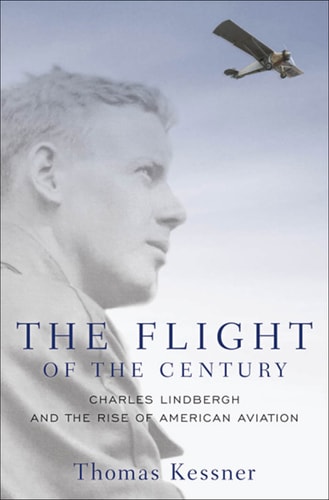
The Flight of the Century: Charles Lindbergh and the Rise of American Aviation
0
0
As an Amazon Associate and affiliate partner, Menrva Books earns from qualifying purchases. Learn more
Author Description
In late May 1927 an inexperienced and unassuming 25-year-old Air Mail pilot from rural Minnesota stunned the world by making the first non-stop transatlantic flight. A spectacular feat of individual daring and collective technological accomplishment, Charles Lindbergh's flight from New York to Paris ushered in the modern age of commercial aviation. In The Flight of the Century, Thomas Kessner takes a fresh look at one of America's greatest moments, explaining how what was essentially a publicity stunt became a turning point in history. Kessner vividly recreates the flight itself and the euphoric reaction to it on both sides of the Atlantic, and argues that Lindbergh's amazing feat occurred just when the world--still struggling with the disillusionment of WWI--desperately needed a hero to restore a sense of optimism and innocence. Kessner also shows how new forms of mass media made Lindbergh into the most famous international celebrity of his time, casting him in the role of a humble yet dashing American hero of rural origins and traditional values. Much has been made of Lindbergh's personal integrity and his refusal to cash in on his fame, but Kessner reveals that Lindbergh was closely allied with, and managed by, a group of powerful businessmen--Harry Guggenheim, Dwight Morrow, and Henry Breckenridge chief among them--who sought to exploit aviation for mass transport and massive profits. Their efforts paid off as commercial air traffic soared from 6,000 passengers in 1926 to 173,000 passengers in 1929. Kessner's book is the first to fully explore Lindbergh's central role in promoting the airline industry--the rise of which has influenced everything from where we live to how we wage war and do business.
Menrva's Summary
THE THESIS
This book investigates how Charles Lindbergh’s 1927 transatlantic flight served as a catalyst for the rapid commercialization and industrialization of American aviation. Thomas Kessner, a professor of history, utilizes primary source documents and media archives to analyze the intersection of individual heroism and corporate interests. He argues that the flight was not merely a singular act of daring, but a calculated event that transformed public perception and enabled the rise of the modern airline industry.
THE SCOPE MAP
What You Will Find
- Historical analysis of the 1927 transatlantic flight and its immediate global impact.
- Examination of the business alliances between Lindbergh and figures like Harry Guggenheim and Dwight Morrow.
- Data regarding the rapid growth of commercial air traffic between 1926 and 1929.
- Exploration of the role of mass media in constructing the public image of the American hero.
THE AUTHORITY PERSPECTIVE
Historians and aviation scholars recognize this work as a comprehensive study of the commercialization of early flight. Readers frequently note the balance between the narrative of the flight itself and the detailed examination of the economic forces that followed.
Page Count:
332
Publication Date:
2010-01-01
Publisher:
Oxford University Press
ISBN-10:
0199752648
ISBN-13:
9780199752645
Biography
History
Aviation
Trades & Technology
American History
Technology
Aeronautics
Community Tags
Similar Books