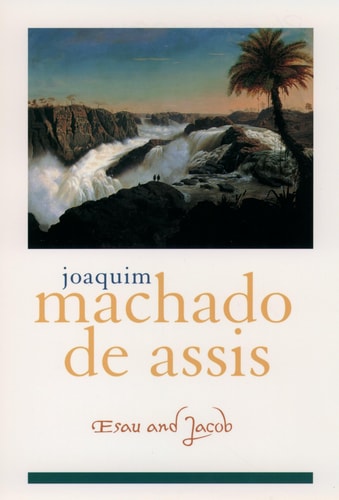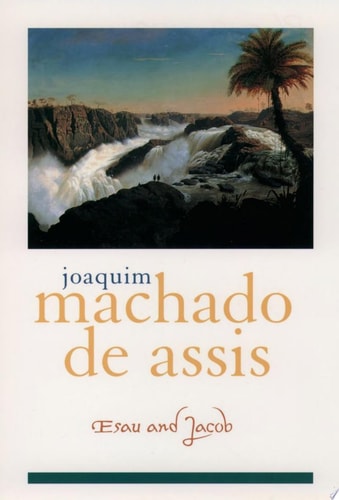
Esau And Jacob
0
0
As an Amazon Associate and affiliate partner, Menrva Books earns from qualifying purchases. Learn more
Author Description
Esau And Jacob Is The Last Of Machado De Assis's Four Great Novels. At One Level It Is The Story Of Twin Brothers In Love With The Same Woman And Her Inability To Choose Between Them. At Another Level, It Is The Story Of Brazil Itself, Caught Between The Traditional And The Modern, And Between The Monarchical And Republican Ideals. Instead Of A Heroic Biblical Fable, Machado De Assis Gives Us A Story Of The Petty Squabbles, Conflicting Ambitions, Doubts, And Insecurities That Are Part Of The Human Condition.
Menrva's Summary
THE PULSE
The central conflict arises from the lifelong rivalry between twin brothers, Pedro and Paulo, whose competing political ideologies and romantic desires mirror the instability of a nation in transition. The brothers, born into a wealthy Rio de Janeiro family, navigate their adulthood by vying for the affection of the same woman, Flora, while simultaneously championing opposing visions for Brazil's future. Their father, a man of traditional values, watches as his sons embody the friction between the fading monarchy and the rising republic. The narrative framework utilizes a sophisticated, ironic third-person perspective that frequently addresses the reader, blurring the lines between the personal drama of the twins and the broader political climate of the late nineteenth century.
INSIDE THE PAGES
- Use of an unreliable, intrusive narrator who frequently comments on the act of storytelling.
- Parallel character development that serves as an allegory for national political shifts.
- Frequent use of irony to deflate the gravity of the characters' petty squabbles.
- Exploration of the psychological tension between traditionalism and modernity.
- Detailed depiction of Rio de Janeiro's social hierarchy during the transition from Empire to Republic.
- Symbolic representation of the biblical Esau and Jacob myth adapted to a secular, political context.
- Focus on the indecision and emotional paralysis of the central female character, Flora.
- Non-linear reflections on history and the cyclical nature of human ambition.
THE COLLECTIVE ECHO
Readers and critics frequently highlight the novel's masterful use of irony and its complex, layered narrative structure. Discussion often centers on how Machado de Assis successfully balances the intimate, domestic drama of the twins with the macro-level political transformation of Brazil. Many observers note that the author's cynical, detached tone prevents the story from becoming a standard melodrama, instead favoring a sharp critique of human vanity. The work is widely regarded as a significant contribution to world literature due to its psychological depth and its refusal to offer simple moral resolutions. Readers often find the narrator's constant interjections to be a defining feature that challenges their engagement with the plot.
Page Count:
304
Publication Date:
2000-01-01
Publisher:
Oxford University Press
ISBN-10:
0199761930
ISBN-13:
9780199761937
Literary Fiction
classic
Realism
Historical