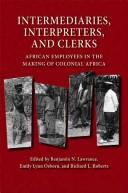
Intermediaries, Interpreters, and Clerks
0
0
As an Amazon Associate and affiliate partner, Menrva Books earns from qualifying purchases. Learn more
Author Description
As a young man in South Africa, Nelson Mandela aspired to be an interpreter or clerk, noting in his autobiography that "a career as a civil servant was a glittering prize for an African." Africans in the lower echelons of colonial bureaucracy often held positions of little official authority, but in practice the occupants of these positions functioned as hidden lynchpins of colonial rule. As the primary intermediaries among European colonial officials, African chiefs, and subject populations, these men (and a few women) could manipulate the intersections of power, authority, and knowledge at the center of colonial society. By uncovering the role of African civil servants in the construction, function, and legal apparatus of colonial states, the essays in this volume highlight a new perspective. They offer important insights on hegemony, collaboration and resistance, structures and changes in colonial rule, the role of language and education, the production of knowledge and expertise in colonial settings, and the impact of colonization in dividing African societies by gender, race, status, and class.
Menrva's Summary
THE THESIS
This volume investigates the critical, yet often overlooked, role of African intermediaries, interpreters, and clerks within the colonial bureaucracy of South Africa. These individuals, holding positions of seemingly little official authority, acted as crucial lynchpins in the functioning of colonial rule. By navigating the complex intersections of power, authority, and knowledge, they significantly influenced the dynamics between European officials, African chiefs, and the subject populations.
THE SCOPE MAP
- Analysis of African civil servants' contributions to the construction and legal apparatus of colonial states.
- Examination of hegemony, collaboration, and resistance within colonial rule.
- Exploration of structural changes in colonial governance.
- Discussion on the impact of language and education in colonial settings.
- Insights into the production of knowledge and expertise under colonial rule.
- Consideration of how colonization divided African societies by gender, race, status, and class.
THE AUTHORITY PERSPECTIVE
The essays in this volume offer a new perspective on colonial states by uncovering the role of African civil servants. They provide important insights into hegemony, collaboration, resistance, and the structures of colonial rule. The collection also delves into the impact of language, education, and the production of knowledge in colonial contexts. Furthermore, it highlights how colonization created divisions within African societies based on gender, race, status, and class.
Page Count:
332
Publication Date:
2007-01-01
ISBN-10:
0299219542
ISBN-13:
9780299219543
History
Non-Fiction
Social History
Colonialism
Bureaucracy
Community Tags
Similar Books