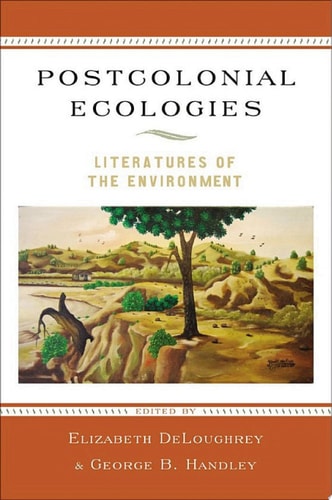
Postcolonial Ecologies: Literatures of the Environment
0
0
As an Amazon Associate and affiliate partner, Menrva Books earns from qualifying purchases. Learn more
Author Description
The first edited collection to bring ecocritical studies into a necessary dialogue with postcolonial literature, this volume offers rich and suggestive ways to explore the relationship between humans and nature around the globe, drawing from texts from Africa and the Caribbean, as well as the Pacific Islands and South Asia. Turning to contemporary works by both well- and little-known postcolonial writers, the diverse contributions highlight the literary imagination as crucial to representing what Eduoard Glissant calls the "aesthetics of the earth." The essays are organized around a group of thematic concerns that engage culture and cultivation, arboriculture and deforestation, the lives of animals, and the relationship between the military and the tourist industry. With chapters that address works by J. M. Coetzee, Kiran Desai, Derek Walcott, Alejo Carpentier, Zakes Mda, and many others, Postcolonial Ecologies makes a remarkable contribution to rethinking the role of the humanities in addressing global environmental issues.
Menrva's Summary
THE THESIS
This volume investigates how postcolonial literature serves as a critical framework for understanding global environmental crises and the complex relationship between human societies and the natural world. Editors Elizabeth DeLoughrey and George B. Handley, both established scholars in the fields of postcolonial and environmental humanities, curate a collection of essays that bridge the gap between ecocritical theory and regional literary traditions. By analyzing texts from Africa, the Caribbean, the Pacific Islands, and South Asia, the authors argue that the literary imagination is essential for articulating the aesthetics of the earth and addressing the ecological consequences of colonial history.
THE SCOPE MAP
What You Will Find
- Comparative analysis of environmental themes in literature from Africa, the Caribbean, the Pacific Islands, and South Asia.
- Theoretical frameworks connecting postcolonial history with contemporary ecological concerns.
- Case studies focusing on specific environmental issues such as deforestation, animal rights, and the impact of tourism and militarization.
- Critical readings of works by authors including J. M. Coetzee, Kiran Desai, Derek Walcott, and Zakes Mda.
THE AUTHORITY PERSPECTIVE
Scholars and critics frequently cite this collection as a foundational text for integrating postcolonial theory with environmental humanities. Readers often note the academic rigor of the essays, which provide a comprehensive look at how global literature reflects the intersection of cultural identity and environmental degradation.
Page Count:
354
Publication Date:
2011-01-01
Publisher:
Oxford University Press
ISBN-10:
0199792739
ISBN-13:
9780199792733
English & College Success
Literary Criticism
English literature
Ecocriticism
English
Community Tags
Similar Books