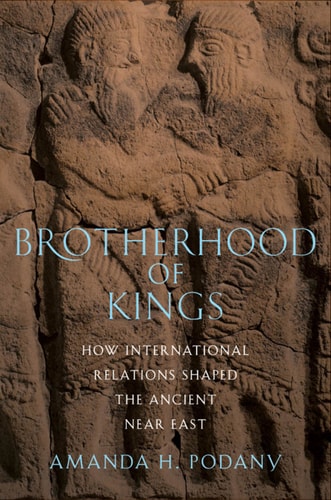
Brotherhood of Kings: How International Relations Shaped the Ancient Near East
0
0
As an Amazon Associate and affiliate partner, Menrva Books earns from qualifying purchases. Learn more
Author Description
Amanda Podany here takes readers on a vivid tour through a thousand years of ancient Near Eastern history, from 2300 to 1300 BCE, paying particular attention to the lively interactions that took place between the great kings of the day. Allowing them to speak in their own words, Podany reveals how these leaders and their ambassadors devised a remarkably sophisticated system of diplomacy and trade. What the kings forged, as they saw it, was a relationship of friends-brothers-across hundreds of miles. Over centuries they worked out ways for their ambassadors to travel safely to one another's capitals, they created formal rules of interaction and ways to work out disagreements, they agreed to treaties and abided by them, and their efforts had paid off with the exchange of luxury goods that each country wanted from the other. Tied to one another through peace treaties and powerful obligations, they were also often bound together as in-laws, as a result of marrying one another's daughters. These rulers had almost never met one another in person, but they felt a strong connection--a real brotherhood--which gradually made wars between them less common. Indeed, any one of the great powers of the time could have tried to take over the others through warfare, but diplomacy usually prevailed and provided a respite from bloodshed. Instead of fighting, the kings learned from one another, and cooperated in peace. A remarkable account of a pivotal moment in world history--the establishment of international diplomacy thousands of years before the United Nations--Brotherhood of Kings offers a vibrantly written history of the region often known as the "cradle of civilization."
Menrva's Summary
THE THESIS
How did the ancient rulers of the Near East establish a sophisticated, enduring system of international diplomacy and trade between 2300 and 1300 BCE? Amanda H. Podany, a historian specializing in the ancient Near East, utilizes primary source correspondence and archaeological evidence to reconstruct the political landscape of the era. She argues that these monarchs, despite vast geographic distances and lack of personal contact, successfully created a framework of 'brotherhood' that prioritized diplomatic negotiation and mutual economic benefit over constant warfare. Her analysis highlights the formalization of treaties, ambassadorial protocols, and dynastic marriages as the foundational pillars of this early international order.
THE SCOPE MAP
What You Will Find
- A detailed examination of diplomatic protocols and trade networks spanning 2300 to 1300 BCE.
- Analysis of primary source correspondence between monarchs of the ancient Near East.
- Exploration of the role of dynastic marriage and treaty-making in maintaining regional stability.
- Historical context regarding the transition from conflict-based power dynamics to cooperative international relations.
THE AUTHORITY PERSPECTIVE
Scholars and readers alike praise this work for its accessible synthesis of complex historical records and its ability to humanize ancient political figures. Experts frequently cite the book as a valuable resource for understanding the origins of international diplomacy and the sophisticated nature of ancient statecraft.
Page Count:
422
Publication Date:
2010-01-01
Publisher:
Oxford University Press
ISBN-10:
0199798753
ISBN-13:
9780199798759
History
Diplomacy
Near East
Middle East
International relations
Ancient History
Ambassadors
Brotherliness
Alliances
Community Tags
Similar Books