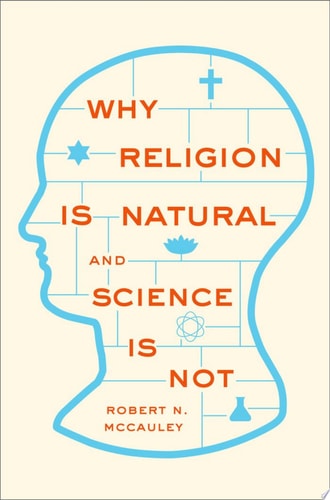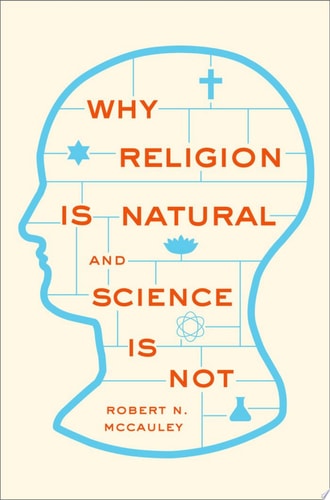
Why Religion Is Natural and Science Is Not
0
0
As an Amazon Associate and affiliate partner, Menrva Books earns from qualifying purchases. Learn more
Author Description
The Battle Between Religion And Science, Competing Methods Of Knowing Ourselves And Our World, Has Been Raging For Many Centuries. Now Scientists Themselves Are Looking At Cognitive Foundations Of Religion--and Arriving At Some Surprising Conclusions. Over The Course Of The Past Two Decades, Scholars Have Employed Insights Gleaned From Cognitive Science, Evolutionary Biology, And Related Disciplines To Illuminate The Study Of Religion. In Why Religion Is Natural And Science Is Not, Robert N. Mccauley, One Of The Founding Fathers Of The Cognitive Science Of Religion, Argues That Our Minds Are Better Suited To Religious Belief Than To Scientific Inquiry. Drawing On The Latest Research And Illustrating His Argument With Commonsense Examples, Mccauley Argues That Religion Has Existed For Many Thousands Of Years In Every Society Because The Kinds Of Explanations It Provides Are Precisely The Kinds That Come Naturally To Human Minds. Science, On The Other Hand, Is A Much More Recent And Rare Development Because It Reaches Radical Conclusions And Requires A Kind Of Abstract Thinking That Only Arises Consistently Under Very Specific Social Conditions. Religion Makes Intuitive Sense To Us, While Science Requires A Lot Of Work. Mccauley Then Draws Out The Larger Implications Of These Findings. The Naturalness Of Religion, He Suggests, Means That Science Poses No Real Threat To It, While The Unnaturalness Of Science Puts It In A Surprisingly Precarious Position. Rigorously Argued And Elegantly Written, This Provocative Book Will Appeal To Anyone Interested In The Ongoing Debate Between Religion And Science, And In The Nature And Workings Of The Human Mind.
Menrva's Summary
THE THESIS
This book investigates the fundamental cognitive differences that make religious belief an intuitive human tendency while rendering scientific inquiry a difficult, culturally specific endeavor. Robert N. McCauley, a pioneer in the cognitive science of religion, synthesizes two decades of research from evolutionary biology and cognitive psychology to construct his argument. He posits that the human mind is evolutionarily predisposed to accept religious explanations, whereas scientific thinking requires rigorous, abstract cognitive labor that only emerges under precise social conditions. By contrasting these two modes of thought, the author challenges the assumption that science will inevitably displace religion.
THE SCOPE MAP
What You Will Find
- Analysis of the cognitive foundations of religious belief systems.
- Comparison between intuitive, naturalistic thinking and abstract, scientific methodology.
- Examination of the evolutionary history of human belief structures.
- Discussion of the social and environmental conditions required to sustain scientific practice.
THE AUTHORITY PERSPECTIVE
Experts recognize this work as a foundational text in the cognitive science of religion, frequently citing its clear distinction between natural and unnatural cognitive processes. Readers often note the academic rigor of the prose, which remains accessible to those interested in the intersection of evolutionary biology and theology.
Page Count:
352
Publication Date:
2011-01-01
Publisher:
Oxford University Press, Incorporated
ISBN-10:
0199827273
ISBN-13:
9780199827275
Philosophy
Religion
Psychology
Science
Cognition and culture
Evolutionary Biology
Community Tags
Similar Books